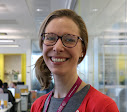
This is who you're reading about

My photo
Wilkommen to my blog - my name is Karin Purshouse, and I'm a doctor in the UK. If you're looking for ramblings on life as a cancer doctor, my attempts to dual-moonlight as a scientist and balancing all that madness with a life, you've come to the right place. I'm training to be a cancer specialist, and am currently doing a PhD in cancer stem cell biology. All original content is licensed under a Creative Commons Attribution 4.0 International License.

Sunday, 11 November 2012

'You get me?'

The furore surrounding the Liverpool Care Pathway (or, as the Daily Mail are currently calling it, 'pathway to death'' or something like that) has caused much discussion in my hospital, as you might imagine.  My feelings on this issue are best shared another time.  But one thing it has made me reflect on is whether I really explain what I mean - i.e. 'You get me?'

Here's the problem - doctors are human, are not perfect and have feelings.  Shocking I know.  And no matter how many times you have been trained to deliver bad news, it ultimately goes against your instincts to tell someone, explicitly, something awful.

'I think you might have cancer'

'I think your dad/mum/wife/husband might be dying'

Those two words in particular - 'cancer' and 'dying' - are surprisingly hard to get out.

There's two reasons for this - first is, it's just really hard telling something these things.  And I know that's what we're trained to do, but you know that once those words have passed your lips, little else you say will be heard.  Even if the cancer is in its early stages, or very treatable, it's heard (understandably) as cancer, and that's that, despite what you say after that.

And secondly, despite popular belief, it's not actually all that easy to know, particularly with the latter, if it's true.  Dying is not a finite art.  Until I started training for this, I'd never seen someone die before.  What I do know is this - everyone will die.  And I wouldn't wish dying in discomfort or pain on anyone.  So if someone might be dying, yes, of course, do everything you can to actively manage the situation with whatever treatment is needed; but also consider that if this is going to be this person's last hours on earth, it should be with dignity and peace.  These two things are not mutually exclusive.

But either way, this whole issue of the LCP has made me think first and foremost of all the patients who have died since I started working, and how closely we have worked with the patient and their families to make sure everyone is informed and comfortable to the end.  It is so difficult to say these final, definitive words about what we think is going to happen next.  But it is not enough to 'think' we have explained what is going on - hiding behind medical words or terms which are not explicit enough is insufficient.  It is far harder hearing this sort of difficult news than delivering it - I will never ever forget that it is my job to be sensitive, explain clearly and make sure we are all singing from the same hymn sheet.  

Thursday, 1 November 2012

Common Sense Science. My very favourite kind!


Because I decided life wasn’t busy enough (!) and I have this irritating obsession with learning things, I’ve just started a course in translational medicine.  What, I hear you cry?  This has been the general reaction from my colleagues and chums.  So I thought I’d take a break from my first assignment to give you my take on what I’m increasingly seeing as ‘Common Sense Science’. 

I think to describe translational medicine; it’s probably easier to think of what one might expect medical research to achieve.  I’d probably kick off with understanding how disease functions on a molecular level, how it starts and progresses, what cells and proteins are involved.  I’d then move on to working out what parts of this mechanism we could target – what are the most important drivers of the disease process?  Next – how can we manipulate these?  Do we have to go back to the original genes that programme the components of the mechanism?  Can we block, change or remove certain cogs in the machine using drugs, chemicals or radiation?  And finally, how do we take all of that into something that you or I could walk into a hospital and benefit from, to either reduce our risk of, or treat, a certain disease? 

Sounds pretty common sense, huh?  Essentially, I think Translational Medicine is taking our understanding of how disease works and using that to make effective treatments for patients.  Sznol has described this better elsewhere as a four- or five-point process, but that’s my take on Common Sense Science.

But it can also work the other way around.  For example, a commonly cited case of pharmacology-gone-(slightly)-wrong is that of Imatinib, a drug designed to target an important disease-progressing protein in a form of leukaemia (Chronic Myeloid Leukaemia).  Cited as a wonder-drug and potential cure, they then realised that actually some patients didn’t benefit from it at all, or alternatively, stopped responding to it after an initially positive response.  Rather than abandon ship, research groups have sought to understand why certain patients are resistant, or develop, resistance to imatinib.  As a result of reversing the bench-to-bedside process, hopefully patients will benefit from imatinib, or drugs like it, in years to come. 

My initial delve into the translational world has raised some interesting quandaries for me.  First, the idea of human beings as a test model.  In the surgical world, it is now well recognised that with new techniques such as laparoscopic (key-hole) surgery increasingly used, and challenges to training opportunities ever-more prevalent, we must create an environment where patients are not practice models.  Innovations in virtual reality and simulators, as well as robotic surgery, are gathering a-pace.  But can the same really happen in the medical (i.e. not surgical) world?  Human beings are so complicated that no other animal, petri dish or fancy chemical model could ever hope to recreate us in our entirety.  But are we ready to accept that we must be willing to be the trial run for drugs?

Second, the idea of physician scientists.  Many authors talk of scientific progress progressing faster than clinical science – i.e. scientists are getting there faster than people like me (remembering though that I am a very junior physician.  In fact I don’t know if I even feel comfortable calling myself that!).   I am an academic trainee, which means that over the next two years, I have some protected research time.  But I have certainly been in situations where people have questioned whether it is wise, or even safe, for me to do this.  Shouldn’t I be training to be a safe physician first and foremost?  Is it appropriate for me to be taking time out of this early stage in my career to do research?  I find this astonishing, and even more so now that I’ve read a bit more about translational medicine.  How are we ever to bridge the gap between scientific innovation and clinical outcomes if there aren’t the people there to bridge the gap?  Stepping into a lab as a physician is a bit like stepping into a parallel universe, and frankly, I’d rather get on board now so I can learn from the start how to combine my life as a physician and a researcher rather than later.  You don’t need to tell me twice about patient safety – it’s what keeps me up at night, me and every other junior doctor. 

Me, Everything Everything and a cup of tea are getting on nicely in our quest to get this assignment done.  And yes, I have received a suitable amount of heckling from my friends that this is how I choose to spend a small chunk of my week of annual leave. 

Monday, 29 October 2012

Addendum to 'Night Shifts'

11. The bit when you've finished your night shifts and have an entirely function-less day where you know not whether to sleep or stay awake and wind up doing neither particularly well.

Moral of the story - the day you finish your nights will always be a write off.  Stash up a backlog of Downton and Homeland and deal with it.  

Tuesday, 23 October 2012

Lifelong learning!

I just wanted to do a quick shout out for this amazing website which I'm currently doing a course on.  Coursera does a whole range of courses for free at various universities around the world - amazing!  I've just started a short course in Community Change in Public Health at John Hopkins University, which I'm doing in my PJs and slippers in the comfort of my own home (on post nights zero days).

No vested interests, just wanted to spread the word.  I love a bit of learning, I do.
The beautiful North.  Oh, how I miss you!
Also - I'm rediscovering long lost music that reminds me of times past (you know that thing where certain times in your life have a sort of soundtrack attached to them?) - I forgot how great Snow Patrol are!  Music and medicine seem to go hand in hand with me - I feel a bit lost when I have one without the other.  

Friday, 19 October 2012

Night shifts

Night shifts are....

1) Waking up patients who really don't want to be woken up because that blood test result you were asked to chase took until 11pm to come back and turned out to be really quite abnormal.

2) Questioning your judgement.  All. The. Time.

3) Asking your seniors unbelievably stupid questions about unimportant things (but you'll remember and learn for next time).

4) Trying to not get too creeped out by the long, dark hospital corridors you are walking along by yourself.

5) Jumping a mile when your bleep goes off just as you've found somewhere to sit quietly for five minutes.

6) IV fluids.

7) Sometimes making tough choices about where to be at any given time.

8) Sometimes feeling this is what you actually trained for 6 years for rather than doing lots of daytime paperwork.

9) Sometimes feeling that 6 years was so not enough.

10) Switching your entire body clock around - a 2:1 ratio of work to sleep will just have to do.

but most of all:
Trying your hardest to keep your wits about you for a very long time, and having something to look forward to when it's all over!

Monday, 15 October 2012

I'm a patient - get me out of here!

My junior doctor chums and I have a cringe every now and then when we think of some of the 'catchphrases' we've developed.  Whether it's asking the patient 'if you've had a bit of a funny do' (read: fit, faint, fall or similar), joking with them 'you look far too well to be in hospital' or apologising for the cold pair of hands examining their chest/abdomen/arms etc by wittily remarking 'well, you know what they say - cold hands, warm heart!', I suppose it's inevitable to develop a stock response to common situations.

But, the one I am always happy to cringe at, is 'well, don't take this the wrong way Mrs XYZ.... but I hope I don't see you again any time soon' - which usually means, we've finally crossed our T's, dotted our I's and found a way for you to get out of here.

Don't misunderstand me - I'm not trying to get rid of my patients; in fact, often quite the opposite - but it is a small triumph for all involved when a patient is finally able to leave hospital.

It is one of the most frustrating part of my job that once a patient is medically fit, there is no certainty that they will be discharged soon.  The BBC is well on the case with this, and it's not a new issue. Although I work in one of the areas with the highest rates of this, it's something I have witnessed since being a medical student in all areas of the country I've trained in.


So what's going wrong?

From my perspective, there's one main issue.  Our old friend, Communication.

There are a lot of players when it comes to getting someone home, and unfortunately, they're rarely present on the pitch at the same time to talk about what's going on.  Patient's wishes are paramount, but input from the medical team, physios, occupational therapists and any other appropriate healthcare workers is needed to identify their needs in the community.  Families may feel they have extra information which may be useful, but this must be balanced with maintaining the patient's autonomy.  Then the social worker is loaded with all of this information and a whole other collection of issues (place of discharge, funding streams etc) come into play.  The difficulty is, a delay in information or progress from one of these groups can hold the whole thing up.  That can even start from a medical perspective, with many multidisciplinary teams being unwilling to start discharge planning until a patient is medically well.

Then there's the disjoint between health and social care.  People often ask me what sort of things I see most often as a junior doctor - an easy answer - it's usually some end effect of someone struggling to cope at home: 'off legs', falls, confusion.  I'm not denying there are often (mostly?) medical components to this as well, but there's a tendency to categorise - is this a medical or a social issue?  I think you'll find it's both.  But apparently we have to box them first and deal with them separately.  Except - it's not really dealt with when you spot the patient's name on the admissions board 24 hours after you signed the end of their discharge letter.  A large part of this is also the lack of support and backing we give the social worker.  We have a large team of healthcare workers of various disciplines that support a patient to discharge in hospital - but arguably the social worker has the toughest job of essentially getting a patient's whole life in order in as short a time as possible.  Basically, all hail the social worker.  We love you, and need more of you!  And finally, the most frustrating off all.  Vacant place in nursing home.  The paperwork's all done.  The patient's delighted.  Their family's delighted.  You're delighted.  And then the transport gets cancelled. And then they lose their place in the home.  And we're back to square one.

So what can be done?

I've worked in some hospitals where there's essentially a multidisciplinary handover every single morning - perhaps that would improve communications.  Efficient ward rounds would leave us with more availability later in the day to catch up with other healthcare workers on the wards, and of course families.  Speaking of the latter, having a more formal means of ensuring patients and their families have regular windows of time to access doctors, nurses, or indeed anyone who they feel would improve their understanding of what's going on.

If politicians, NHS managers, doctors, ANYONE, is serious about giving our ageing society a better deal, I'd suggest the medical/social interface would be an excellent place to start.  

Sunday, 5 August 2012

First Days as a Junior Doctor

As you may have gathered, my full time job is not, sadly, as a Open Access advocate, but my passion to campaign for Open Access is driven by what my actual (new) job is, as a junior doctor.  Three days in, and we're still smiling (just!)!

I think the main lesson I've learned is this: when in doubt, phone switchboard.  Because I think almost universally, all new doctors and I have agreed that what makes the first few days tough is organisation, or lack thereof.

Day one started off well.  I'd done some shadowing the week before, but really it was the final day of shadowing that gave me the truest flavour of what was to come.  My predecessor did his best to tell me how to make various things happen and generously said I should contact him if I had any queries, however big or small.  So when day one kicked off, I was buoyed by a feeling of 'this is going to be painful, but I'm as ready as I'll ever be'.  A few hours later, an inevitable few tears were shed - my list of things to do seemed too huge to contemplate, and many of them I was unsure how to make happen (referrals, ordering investigations, that sort of thing).  Nothing life threatening obviously, but enough to make you feel wholly inadequate!  At medical school, I had deliberately committed a lot of time in the early run up to finals getting slick at these sort of jobs, but ultimately systems differ everywhere.  You wouldn't believe how many different ways there are to write a discharge summary.

Last ones out of the hospital!
By the end of the week though, I think I was a bit more on top of things.  This is where my 'call switchboard' mantra was born.  Well, not just switchboard.  Asking for help is fortunately not something I'm embarrassed to do, and those around me have been amazing at answering questions big and small, complex and simple, and coming to help when I need it.  The challenge really is organisation, because inevitably someone will get sick, or relatives will appear who want to to have a discussion, or something else will disrupt your to-do list, and you have to be ready to deal with it without forgetting the rest of your tasks.

Most of all I am grateful to the team I'm working in - the porters, the domestic staff, the physios and OTs, the nurses, the other doctors - all of whom have had a brief smile and conversation to share as we work together and make me feel like I do belong there, even if I'm still learning.

There will be more long, long days ahead, and many more moments of uncertainty, but nothing beats that doctor-patient interaction for me.  Whenever I've been stressed or scared, it's only taken a brief moment with a worried patient for me to know that I'm exactly where I want to be.  Cheesy, but true.