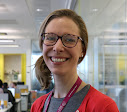
This is who you're reading about

My photo
Wilkommen to my blog - my name is Karin Purshouse, and I'm a doctor in the UK. If you're looking for ramblings on life as a cancer doctor, my attempts to dual-moonlight as a scientist and balancing all that madness with a life, you've come to the right place. I'm training to be a cancer specialist, and am currently doing a PhD in cancer stem cell biology. All original content is licensed under a Creative Commons Attribution 4.0 International License.

Saturday, 29 December 2018

All That is Cancer Is Not Lost

Merry Christmas and Happy New Year, folks!  Phew, the last 4 months have been...well... crazy.  We've moved across the country, new jobs, planned a PhD (ish), moved house 3 times, bought a house, planned a wedding.... I can't necessarily recommend doing all of these things simultaneously, but equally doing so much 'adulting' in a short space of time feels like something of an achievement!

The cherry on this life cake was that I drew the short rota straw and was on call on Christmas Day - maintaining my 100% clinical Christmas working record!!  However, I really can't complain - for one thing, as ever, festive cheer was in great supply and I even met Santa :). And secondly, I was able to 'leave the building' and do the remainder of my 24 hours on call from home.  That means phone calls at 3am, but it also meant Christmas dinner courtesy of Mr KP!

A lot of being 'on call' for oncology involves being called by other doctors from essentially any clinical department for advice - A+E, GPs, any medical or surgical specialty, intensive care, etc etc.  We are often asked to give a view about prognosis and expected outcomes to help them guide their decision making. Prognosis is really hard to gauge, particularly at the end of the phone, sometimes in the middle of the night.  Clearly at my stage if it's unclear I'll seek higher wisdom.  But my main take home in the year I've been an oncology registrar is this:

  • Metastatic cancer does not mean someone is at the end of life.  In some cases, they are still curable.
  • Palliative treatment does not mean that someone is at the end of life.  
  • Palliative treatments (yes, plural, for many cancers) can significantly extend life, and quality of life.  
  • Patients with metastatic cancer on or considering palliative treatment can, in some cases, live for many years and may even die with, rather of, cancer. 

The wider world should be encouraged that oncologists are consulted on these sorts of matters, but I can't help but feel we should be doing more to spread the gospel that all that metastasises is not lost.  Of COURSE one can never give a blanket, catch-all statement about all patients with cancer - cancer is not one disease.  It's lots of different diseases really, with different biology, different molecular profiles and different treatment options. Plus patients may have other medical problems that must be taken into account.
But (for example, and broadly) - metastatic testicular cancer is often still curable.  Patients with metastatic prostate cancer have a prognosis of years at diagnosis, as do many other cancer types.  Yes, some cancers have a less positive outlook, and it's important we are up front about that too.  Also we can't predict how everyone's individual cancer will behave - sometimes they progress faster or slower than anyone can predict.  The point is that it varies HUGELY.  I sometimes wonder whether we need to change our language as oncologists.  Heart failure is a chronic disease which is generally irreversible and can be life-limiting but can be medically treated and extend life - in what way is metastatic cancer different?

So consider this blog post the start of my efforts to get the word out there.  My professional New Years Resolution is to talk more about prognosis and manage expectations for patients and medical types alike where cancer is concerned.  I am determined to be a pragmatic advocate for my patients. 

Adventures of 2018 offering inspiration to those of 2019!
2019 is going to be full of adventures, with hopefully more hill stomping, sea swimming, music playing and, now that I have a view to paint, a return to creative moments! Because if doing a job like mine doesn't teach you that the most important thing to embrace Living, I think you're probably doing it wrong.  

Saturday, 25 August 2018

To Scotland we go!

I'm not sure if it's just because I've moved to sunny Scotland, but it definitely feels like Autumn is on the horizon.  In life terms, for me it's definitely 'Spring'- new job, new city, new adventure awaits!  Who says turning 30 means life gets quieter....
Scottish sunset loveliness 

The Mister and I have migrated Up North in search of that career/life utopia known as Work Life Balance - or rather, having everything we could dream of from both of our jobs with everything we could dream of for our lives (read: buzzing city, mountains, the sea and such) all on our doorstep.  My new job means I continue my Oncology specialisation training and do research all the way to Consultant-dom - exciting stuff! As anyone who has ever moved house will know, it's been rather epic - after all, the downside of being 'in one's thirties' is that a significant accumulation of 'Stuff' has happened.  Long gone are the days of fitting everything in the back of my Fiat Punto.  I've reached the stage where we have to put furniture in storage, and need not just a van but actual human help to move our belongings from A to B. Ahhh! I'm a grown up!!

A few weeks into my new job, it's all starting to slot together.  My new colleagues and department could not have been more welcoming, and the training environment feels very supportive.  We've certainly had a thorough induction which is never to be taken for granted, and always appreciated! It may surprise those who don't work in healthcare to know that there is amazingly little overlap between the day-to-day computer and information systems in different healthcare trusts.  It's amazing how many different ways there are to communicate a blood pressure, prescribe a drug or request a chest x-ray.  Purple forms (Do Not Rescuscitate forms) are now Red Forms.  Aria (chemotherapy prescribing software) is now ChemoCare.  EPR (electronic patient record) is now Trak.  Everything is different!!! Of course, that's in addition to all the newness that comes with any new job - new people, new logins x1000, new buildings (yet to work in a hospital that isn't a maze!!!).
Moving = chaos... 

I became an Oncology Registrar six whirlwind months ago and I've had the rather odd realisatisation that I may have actually learned something during that time. Becoming a specialist was incredibly daunting. I was forced to have faith in myself, and trust in what I did, and didn't, know.  I survived a steep learning curve, and by the time I moved up here, I felt like I was better than when I started (with a blimmin long way to go!).  I felt like people (the patients as much as my colleagues) trusted me, and I started to trust myself.  I felt like, to a few people at least, I might have made a positive difference.  Conversely, I felt like I had been honest and reflective when things hadn't gone so well, and, overall, I felt accepting that it was OK to still be learning and ask questions.

Reflecting on my first months as a registrar, the most useful and important thing I learned, courtesy of a superb consultant I worked for, was this - I should trust in the relationship between me and a patient. Listen to their anxieties, meet them with your own, and have faith in each other when you make decisions together.  I also remain convinced of the best baseline triad of rules for any doctor (coined by an Emergency Medicine physician I think) - don't be a d***, and be kind to yourself and others. The middle of these is the one I think many of us struggle with, and I hope an area in which I'll improve.

Leaving a place I knew was incredibly daunting, having done all of my postgraduate medical training there (2 plus 3 years), meeting some incredible mentors and making precious friends. But it's exciting to look forward and get a fresh perspective. I'm hoping to blog a bit more often about working in cancer care, and about cancer research, and I hope you'll enjoy reading along.

Turning 30 ain't so bad! 

Tuesday, 6 March 2018

Registrar Reflections

Happy new year, bloggers!  Or rather, Happy Spring!  As ever, I've been a bad bean at keeping up with things.  Updates from my end:

- I'm a Medical Oncology Registrar - yikes! (i.e. the last bit of my specialist cancer doctor training)
- I'm heading back to the homeland - wowsers! (i.e. I got a Clinical Lectureship in Scotland to facilitate ongoing nerding out alongside clinical training with mountains in situ!)
- I said 'yes' to getting married - woohoo! (I'm not sure this one needs explaining...)

So it looks like 2018 is going to be a busy year.  But the first of those three things is the main thing keeping me entertained at the moment.  People say becoming a registrar is the scariest step up after qualifying from medical school in the first place.  Seems to me that makes it an important experience to reflect on, and four weeks in, here are my early thoughts on being a new registrar.

1) People are a lot nicer to you when you're a registrar than when you're an SHO.  Not that they were horrible to me before.  It's just a totally different vibe, both within and beyond your department.  Within my department, everyone has been supportive and helpful, offering help and general wisdom.  Beyond my department, people are willing to hear you out with a kinder word.  I guess it's just a general conveyance of being wanted.  Something I will definitely reflect on in my interactions with junior colleagues. 

Disproportionate excitement at having my own one of these.  

2) It actually feels like I'm being trained to be a specialist with specific skills and knowledge, rather than a bum on a seat that will learn things by osmosis.  It's really made me think about the point of middle-stage training - in my case, Core Medical Training.  I've been a doctor for nearly 6 years, but I'm pretty sure this is the first time I've started a clinical job and felt like I haven't been chucked in head first in hopes that I'll just work it out. It's also the first time I've had a desk!  And a locker!!!

3) It's quite scary that people take your word so seriously.  But that's part and parcel of getting more responsibility, right?

4) There are a lot more men than women the higher you climb up the ladder. 

5) Associated with being higher up the ladder - it does not stop you getting a lot of advice you didn't ask for.  I've been pondering if this is an issue suffered more by female professionals, because I don't recall my male colleagues ever grumbling about it.  Don't get me wrong - I am in serious need of help, wisdom, support and advice, particularly at this juncture of my professional life.  And to an extent I probably don't know what I need to know, and should listen to random nuggets of advice.  But I'm getting a little tired about being given advice about work, life, work/life balance, family life, social life etc etc... without being asked about my background in any of these areas. 
Seems apt at this point to give kudos to my last Educational Supervisor, who, three years ago, spent the first few minutes of our introductory session getting a summary of my life so far.  Meant that when he did give me advice, it felt like it meant something and was actually relevant (and it was indeed life advice I think I'll remember for a long time to come).  Again, something I will reflect on moving forward. 

6) Also I need to chill about the whole 'unwanted advice' thing.  It's always well meant.  I think.  And it's going to keep happening.  I think.  So might as well not raise my blood pressure over it. 

7) The main difference of moving from generalism to specialism is the loss of one's barometer.  I feel like in general medical situations I'm pretty ok at feeling it out - you know, 'bad' versus 'not bad', and knowing when to worry versus when to be reassured.  When you move to becoming a specialist, your barometer is not yet fully formed.  I'm sure it will, in time.  Right now I feel like I'm anxious pretty much all the time, and asking a thousand questions.  But I think it's probably better to be neurotic at this stage of things that over-relaxed. 

No #snowmaggedon will stop me getting to work...
8) I'm not terrible at this.  I did my first 7-day stint as the oncology registrar on call recently, which involved being the acute oncology ward registrar as well as taking referrals/giving advice all over the region and making admission/discharge decisions through the oncology triage unit.  It was full-on information overload, with my bleeps, mobile phone and emails all going off, often simultaneously, in addition to nurses and junior doctors coming to me with problems that needed solving.  Going home at night-time over the weekend knowing my phone could go off at anytime was a whole new experience.  I didn't do it all perfectly and there is a LOT of room for development - but I did it.  There were no tears, we even had a few laughs.  When one of the F1s said I'd been a good registrar, I wanted to hug her.  I left thinking 'I can do this'. 

There will be many nerve-wracking 'firsts' over the next few weeks, but I'm going to have to embrace the familiarity of these emotions.  I KNOW what it's like to be absolutely terrified - my first week of nights as an FY1 (= intern) I basically didn't sleep for terror, and cried after almost every shift.  I've got to take some confidence from the fact that I've come so far from those scary days.  Plus I think a lot of the nerves comes from being a perfectionist.  Not an awful quality, as long as you keep it in check...

Also high fives and hugs to Mr KP and friends who have provided important moral support.  Maybe that's the difference - it's much easier to go to work and do your thing when your house is in order (metaphorically as well as literally).  Yippee!

Friday, 27 October 2017

Mental Health and the Medic

Wonderful post-nights fall frolicking
I've just finished another week of nights and for some reason, they really knocked me for six.  I've done night shifts ever since I qualified as a doctor five-and-a-bit years ago, so I can only conclude that ageing is starting to hunt me down. To an extent, I think I've got my routine sorted, and my night shifts on my current job are far from my most stressful. Nonetheless, there are still moments when you get a bit anxious about the decisions you made in the middle of the night, or feel a bit low when you're looking after particularly unwell patients who pass away despite your best efforts.  But I think these are normal feelings shared by most doctors.  The difficulty is recognising when the feelings of 'down and anxious' are the rule rather than the exception.

In the last few months, it has become increasingly apparent to me how many of my friends and peers are suffering from mental health problems.  Of course, I am not here to 'out' them - but more to reflect on this silent wave of illness that simmers beneath the surface, just as much as any cancer, before it makes its presence known.  Depression and anxiety in themselves affect a huge number of people - and yet they go completely unspoken as if they were an embarrassment or a failure.  What is notable to me is that most people I know in this situation are, on the surface, absolute high flyers.  They are the best of the best in what they do.  They have never known professional failure.  They are held in the highest regard by their peers.  They are outwardly A Massive Success and yet they are not well at all, and see this as a failure.  

I have sometimes struggled to know how best to support my friends as they make the journey to recovery.  Perhaps that comes as a surprise to lay people that I, as a doctor, don't know what I'm doing when it comes to this aspect of health, particularly when it hits close to home.  It's difficult to know you're doing or saying the right thing, that you're making yourself available enough both physically and emotionally, and that you're striking the right balance between simply listening and actively advising. It makes you question your ability to be not only a good friend but the right kind of friend.  I'm still not sure I've nailed that balance.  I've definitely found I've needed my own support network to offload the impact of these precious, complicated feelings that have been entrusted to me.

An Austrian vista
The conclusion I've come to is, much like grief, the most important thing is to look it in the face and acknowledge it.  It's easy to focus on the 'good days' to avoid accepting the greater majority of 'bad days', particularly when 'bad days' are really, really bad - and being unable to 'function' on such days is a sign that it's time to find help.  We are worth so much more than living in misery and struggle.  And 'looking it in the face' goes for those of us supporting peers, friends and loved ones too.  We mustn't shy away from it because we're scared that we'll react, listen and respond in the wrong way.  Far better to engage imperfectly than not to engage at all.  

I am glad that the Royals (cheers, Wills, Kate and Harry) are making mental health an area for national discussion - it affects everyone and anyone, and respects nothing and no-one.  There are those that might read this and think that to complain about high flyers with mental health problems is barely a problem worth talking about - but I would disagree.  We're all people and this is a problem that will only worsen with time.  Not talking about it feels like a far greater risk.  

Our mental health is a precious and delicate thing, and I'm aware that I need to find my own ways of looking after mine.  My dad is the one who taught me not to work too hard - to work 'quite' hard, and with commitment and passion, but not to lose sight of the balance of things.  Having got that balance wrong quite often during my training, I hope that I'm establishing a sustainable work-life balance, and it's that sustainable element that made me quite comfortable to admit this 'don't work too hard' ethos over an academic dinner to my neighbour, who worked for a major research funder.  And you know what? She welcomed it.  And that makes me think that the Big Guys understand that this is a problem too.  

Take care of yourself, and take care of those around you.  Don't be afraid to ask the questions 'are you ok? Is there something else going on?' - asking these questions is unlikely to make things worse, and may just be the trigger that turns someone's life around.  

Friday, 21 July 2017

The sneaky approach of Black Wednesday...

Another year in the lab is about to come to an end, and what a whirlwind of a year it's been.  For a clinician scientist-in-training like me, it can often feel like you're treading water rather than actually swimming forwards.  But for the first time, as my last phase of general medical training (Core Medical Training) approaches, I feel I can see the light at the end of the tunnel.
Bungles here, Bungles there, Bungles everywhere!

Do you ever look at yourself in the mirror and wonder how on earth you ended up, well, HERE? Wherever 'here' is for you.  In my case, I'm 29 years old - TWENTY NINE!!  And I'm a doctor, and still quite a junior one, but not a very junior one.  And I'm also a scientist, and still quite a junior one, but I guess also not a very junior one.  Hmm!  And hopefully I'm also a lot of other things - being, as I hope, not entirely defined by my professional roles.  For one thing, I think I've nailed 'the doctor game' with my 3 and half-year-old niece (her idea, not mine!), and my colouring in skills are second to none.  The point is - I've progressed!

 A friend of mine quite wisely pointed out recently that while it can often feel that we are being pulled and pushed along a path we have not designed, ultimately we have made choices that lead us to where we are now.  It's just easy to forget them.  So when I read statistics such as an increase in unfilled junior doctor positions of 31% in one year, I know that's also no accident.  For the training programme I'm soon finishing, they have seen an increase in unfilled posts of nearly 10% in ONE YEAR.  Go one step further back in the career ladder, and only half of doctors completing the foundation programme (sort of like internship programmes) applied to higher training as GPs or specialists.
Dreaming spires, even when the summer sun is hiding
I'm part of a new generation of doctors, unfamiliar to the last, that is taking the scenic route through postgraduate medical training.  I too took a 'gap year' between foundation and specialty training - as did most of my friends at medical school.  Taking time out is not 'wasted time' - we return to training with new skills, new knowledge and new energy.  For me, research offers the opportunity to exercise a different part of my brain and I don't think it makes me a worse medical doctor (as discussed elsewhere in this blog).  For those who take time out to do short term clinical jobs in specialist areas, what they bring back to the table is hugely valuable.  In fact, I recently spoke to a friend who is now finding it difficult to be competitive in applying for a position outside her training programme because they have gone straight through without any time out.  I strongly feel that if the System closes its doors to these creative routes through medicine, those statistics of unfilled training jobs will only become more worrying.  

I am also part of a generation of doctors who has lived through this contract and NHS reorganisation fiasco.  And of course it's made me think about my priorities - because the system in which I work does not have time to worry about them on my behalf.  For me, having time to cycle, go for a run or play music are things that make a busy working life sustainable.  In the rotation I'm about to start, I got my rota a few weeks in advance, had a degree of choice over which rota I started on and I've already had some very precious annual leave approved.  They sound like little things, but they make me feel like a person with a life.  It's these little things that can make all the difference.  
Hopping from one job to the next...

So as Black Wednesday finds me, I'll be nervous to return full time to the clinical world and leave my cells for someone else to worry about.  My tips for new docs?  Gosh, I can't believe it's five years since it was my first day on the wards.  The top tips I'll be referring to myself are:
1) Ask a zillion questions over the first few days.
2) Learn how to do the basics! Prescribe things, request things - the actual LOGISTICS of doing these things are often the hardest!
3) Learn everyone's name - nurses, cleaners, HCAs, doctors - they are all friends you will need along the way.  

Wherever 'here' is for you this Black Wednesday, good luck - and remember everyone's had a 'first day' :) so be nice whichever side of it you're on!

Wednesday, 19 April 2017

Why is Generalism not a more Valued Specialty?

When I describe what I do, even to other doctors, they'd probably say it was quite niche.  It's going to become even more niche as time goes on, as research takes me down a particular cancer subtype, even down a particular genetic route.  It's quite possible that when I'm a Consultant, many moons from now, I might only specialise in one or two cancer subtypes, and in the research world, my area of expertise might be reduced down to a very specific area of molecular biology.

One might call this 'Extreme Funnelling' in the sense that when I did my medical finals 5 years ago, I was still being examined and assessed as a doctor who could work in obstetrics, paediatrics, psychiatry or surgery.  During my first two years as a doctor I worked, amongst other things, in surgery and ITU.  Since starting core medical training, I still rotate through 'General Medical specialties', and, particularly when I'm on call, cross cover for a bunch of medical specialties.  But, all being well, after my next year of clinical work, I'll be predominantly working with cancer and nothing else as my training continues.  This is true of most of my friends who have ended up in the research world - they started off as generalists, and now subspecialise in things as diverse as veterinary neurology to paediatric epidemiology.

In complete contrast to me, my partner-in-crime is all about generalism and what I would consider the action-packed coal face of medicine.  He works in intensive, emergency generalism - specialising, if you like, in being a generalist - much like GPs or geriatricians.  And yet, he quite reasonably debates with me, why is it that most people who do research or are quoted as being 'world leading' or whatever, go on to subspecialise in something extremely narrow?  And why do we value that so highly over the actually far greater skill, and perhaps more promising challenge, involved with receiving someone in a heap and dissecting apart what's going on, making a diagnosis (or diagnoses) and initiating treatment?

I have to admit that this is a very good question.  Why do we end up in super-specialised areas of medicine?  For the wider world, obviously it's much more appealing to have one person who can deal with all the cases of rhabdomyosarcoma, a disease diagnosed in 100 children across the UK each year, who therefore knows how to manage such a rare and aggressive condition, versus a generalist who might see one or two across the span of their career.  But for the individual doctor, surely it becomes quite routine when that's all you see.  It's like calling a cardiologist to ask them to see your patient because they've had a heart attack - when that's all you ever see, heart attacks become pretty routine and samey.

'When I am old I will wear purple...' - graduating
as Members of the RCP with my two best pals from 
medical school. 
People say they specialise because they like the focus of dissecting apart a a particular problem or area, and exploring it in infinite detail, but a generalist might argue that this is exactly what they are doing, just from a broader start-point - and yet we seem to value it less.  If I had a pound for every time someone has asked me if I want to specialise or become 'just' a GP... as if being a GP is easy! Amongst medics we would say that being an average GP, much like anything else in life, is probably a manageable goal, but being a 'good' GP seems incredibly hard.  Balancing good clinical practice with pragmatism is not easy.  Teasing apart that benign-sounding chest pain from a pulmonary embolism or that slight foot drop with a brain tumour - or the patient who is dying at home and should be palliated in their own surroundings, versus the patient with a terminal illness who needs to be admitted to hospital to treat just their reversible chest infection - are just some of the challenges that spring to mind.  And those are just the clinical challenges, let alone the administrative ones!

I think the other issue with generalism is the associated clinical lifestyle.  Generalists - such as GPs, Emergency Doctors and Acute Medics - are increasingly dumped upon by everyone else.  That means working more evenings, more weekends, more night shifts, more scape-goating by the media, more pressure, more rota gaps, more late finishes.  I hear it gets better, but it's hard to believe that after years of being a junior doctor rotating through general specialties on intense rotas.  As such, people make other choices.

So why am I choosing a life of specialism?  Perhaps it's because I want to know 'everything' and the only way to get close to that is by exploring something in a lot of detail.  I like the idea of knowing the limits of my knowledge about something and knowing how I can tweak away at those limits.  I also want to influence the treatments and management strategies we use and make them better.  The only way to do that is to specialise. But it has made me think that a healthy dollop of generalism is fundamental to my future practice - something I reflected on a little last week as I attended my Royal College of Physicians graduation (membership of which required a mountain of further postgraduate exams on the *entire*, and thus very general, scope of clinical medicine!).

When discussing this, my partner and I also couldn't escape the importance of early formative experiences in making these sorts of career choices.  In many ways, the technical work and fast pace of intensive care, surgery or emergency medicine should completely appeal to me, and yet here I am, training as a cancer specialist.  I'm sure that's in no small part due to the cumulative effect of both positive and negative experiences both in and out of the hospital - one supportive registrar here, a dismissive consultant there - these things can make all of the difference.  Perhaps something for us all to remember as  we try to encourage those junior to us to consider following in our footsteps.

Wednesday, 29 March 2017

Imposter Syndrome

Well, exciting times folks.  We found something cool!  Well, I should say Gary the Cell started off something cool, which some clever colleagues of mine have transported into a very exciting discovery.  In short, the genetic mutation that is considered one of the earliest steps in the development of brain cancer might actually render brain tumours targetable by drugs that are currently used in patients with, for example, ovarian cancer.  This might transform the way we treat brain cancers.  Isn't that awesome?!

That's the good version of my 'clinician attempts to do science' story.  Clinician scientists have a unique role because we connect the patient world with that of lab bench land - this is often called 'Translational Science' because the aim is to 'translate' research findings from the lab into something of relevance and importance to patients. 

But man, it is not always easy.  When I was doing research in the USA, I was largely protected from the quandary of splitting yourself down the middle between two jobs because my type of visa meant I wasn't allowed to work clinically.  This year, I am predominantly doing oncology research; we're trying to understand what happens when cancers outgrow their blood supply.  This means that increasingly cancers adapt to survive without oxygen.  These 'low oxygen' parts of tumours are particularly resistant to treatment.  We're trying to capitalise on this cancer-unique situation so that we can develop new ways of reaching these untreatable parts of cancer.  But alongside that, I do a colorectal cancer clinic once a week under the supervision of an amazing couple of Professors - seeing patients on your own in such a specialised setting is ultimately what I hope to do for the rest of my career, but it's a huge responsibility that I take very seriously as well as enjoy a great deal.

Exciting stuff, but there's a reason why people spend 5-6 years at medical school or 6-7 years (if you count Bachelors/Masters/PhD degrees) at university to become a doctor of either medicine or science.  I often feel a bit like Bambi on ice trying to stay on my feet, and now that I'm doing research back in the UK, I have to keep my toe in the clinical world.

Can medical doctors be good doctors AND be good scientists?  Perhaps I'm not in the best position to judge.  I became a doctor because I love people, science and the interchange between the two, but I also think it's important to use that to see where the gaps and problems are and look towards solutions - which is where the science bit comes in.  But of course I don't know anywhere near as much about the science itself, or different scientific techniques, as people who have committed their entire career to the discipline.  It's something I sometimes feel guilty about because resources and funding are increasingly tough to come by and you want to know they're being used as efficiently as possible.  I'm also acutely aware that modern day drug discovery results in therapeutics often beyond the financial scope of even very wealthy countries, and that actually improving service provision and accessibility to existing therapies offers huge life saving opportunities.  Would my research skills be better used improving the utility and efficiency of what we've already got?

The worst and weirdest thing about splitting yourself between the two is that when you're doing one of them (say, clinical medicine), you worry that those with whom you do the other (science) think you're just having a wee break, and vice versa.  Certainly I sense from some of my doctor pals that I'm on a relaxed year of research.  Everyone (I think) knows how hard doctors work, but scientists are absolute machines with a phenomenal work ethic who, at a PhD and post-doc level have minimal job security and tough job prospects.  It's a privilege to be part of that and know that if your whole experiment goes down the pan, you can still sling a stethoscope round your neck and do another job that you also love.

I'm very lucky to have two completely different areas of professional interest that make my brain swizzle so much in completely different ways.  Perhaps feeling like a bit of an imposter in both is the trade-off - and perhaps a trade-off that will evolve over time.  Especially as it's only one part of the life jigsaw!