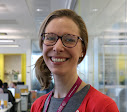
This is who you're reading about

My photo
Wilkommen to my blog - my name is Karin Purshouse, and I'm a doctor in the UK. If you're looking for ramblings on life as a cancer doctor, my attempts to dual-moonlight as a scientist and balancing all that madness with a life, you've come to the right place. I'm training to be a cancer specialist, and am currently doing a PhD in cancer stem cell biology. All original content is licensed under a Creative Commons Attribution 4.0 International License.
Showing posts with label Research. Show all posts

Saturday, 21 March 2020

Love in the time of Coronavirus

I have a friend who works as a cruise ship doctor (he's one of life's top humans, by the way. He created the bar for our wedding despite running two businesses and having at least two other jobs. And he is generally chief orchestrator of FUN).  In fact, he's on a cruise ship right now.

Now I know what you're thinking - working on a cruise ship, now? Bold!  And then think that through - can you imagine three months ago thinking that working on a cruise ship could be considered an extreme activity?

It seems prudent to write at this time, if nothing else to serve as part of the record of this once-in-a-lifetime event.  I'm a cancer doctor but as chance would have it, I'm currently a laboratory-based PhD student doing brain cancer research.  I have been doing work on-call (weekends, evenings) since I started in August but basically I'm a scientist in training right now. I feel utterly helpless.  I've had all the support I could dream of in terms of going back to the clinical world, and have indeed been told that I'll probably be drafted in to work clinically.  But it's all about timing, and the time is not now.  For now, I need to try to calm myself and generate some kind of PhD-from-home strategy, and for how long no-one knows.  Meanwhile, Mr KP, who works as an Emergency Doctor, has been living the effects of the day-to-day changing of decisions, policies and patient flow.  Having just finished nights, we've therefore both been at home.  

Mr KP and I are so very lucky.  For one thing, we're a 'we'! Social distancing is a lot more tolerable when there's two of you. And although we are generally not people who talk about work in our home, it's a relief to have someone who understands as much as anyone can right now about how we're going to emotionally deal with this.  Love!  
Our survival strategy - games and gardening!


Physical on-your-own isolation must be tough, and I'm reaching out to friends who live alone; but what's been interesting is that this event feels (for me at least), The Opposite of Loneliness.  I've actually had to mute essentially all of my WhatsApp groups and put my phone in another part of the house for large parts of the day.  One evening there were easily 200 messages floating between my two labs and my clinical work WhatsApp groups.  Love, but for me, it's a bit too hot to handle.  

We are incredibly lucky to have such a big group of medical friends who, quite honestly, have been my source of calm in all of this, in spite of the fact they are the very ones on the coalface.  I had a big gathering of my best buds from university in late January (again - timing! Phew!) - forty of us when you include kids, plus a couple of dogs for good measure.  That's the sanest big WhatsApp group of which I'm part.  We've started doing regular video meet ups and it would be a strange irony that being so limited in our ability to physically be together will probably bring us closer together in just about every other way.  Love! Social distancing is so important, but we can find trust and comfort even in physical isolation. For me it's helped me manage my worries about what's ahead.  

Fuelling anxiety helps no-one.  That's what makes it galling when you see the over- or under-playing of the situation either by excessive Twitter anxiety or lack of social distancing respectively.  The result? Anxiety - and actions driven by anxiety - or inaction.  I've seen any number of articles by Dr Blah Blah Blah saying the government strategy is wrong, or it's not enough, or it's too much, or everything in between.  I used to read these articles.  Now I don't.  Why?  Because this is an unprecedented situation, and I am not an expert.  I see in my day-to-day life that uncertainty and ambiguity leads people to be unsure about what to do - so either they fail to change their actions, or feel anxious, or any number of unhelpful things.  We would never trust one individual person's view (our own or someone elses) in our own lines of work, so why do we do so now in an area so complex and multifaceted? Show yourself some love and switch these sources of reading OFF.  

People keep saying to Mr KP in particular that things must be very stressful given his line of work.  Honestly, I think it helps to know that he, and eventually me, are able to be useful.  I appreciate this particularly currently as I feel useLESS.  The need to feel needed is a powerful emotion, and surprisingly stressful.  That in itself makes me feel guilty - and so the cycle continues.  My utility right now is probably to Stay Well, reach out to the lone livers and find a sustainable way of living distantly.  And encourage those I can to Calm Down and #StayTheFHome.  
Rays of light as storm clouds gather

As Hugh Grant (or The Prime Minister) wisely said in That Film - 'General opinion's starting to make out that we live in a world of hatred and greed, but I don't see that. It seems to me that love is everywhere. Often, it's not particularly dignified or newsworthy, but it's always there - fathers and sons, mothers and daughters, husbands and wives, boyfriends, girlfriends, old friends.... If you look for it, I've got a sneaky feeling you'll find that love actually is all around.'

So go and give your loved ones a virtual hug, and thank modern technology that we can!

Saturday, 25 August 2018

To Scotland we go!

I'm not sure if it's just because I've moved to sunny Scotland, but it definitely feels like Autumn is on the horizon.  In life terms, for me it's definitely 'Spring'- new job, new city, new adventure awaits!  Who says turning 30 means life gets quieter....
Scottish sunset loveliness 

The Mister and I have migrated Up North in search of that career/life utopia known as Work Life Balance - or rather, having everything we could dream of from both of our jobs with everything we could dream of for our lives (read: buzzing city, mountains, the sea and such) all on our doorstep.  My new job means I continue my Oncology specialisation training and do research all the way to Consultant-dom - exciting stuff! As anyone who has ever moved house will know, it's been rather epic - after all, the downside of being 'in one's thirties' is that a significant accumulation of 'Stuff' has happened.  Long gone are the days of fitting everything in the back of my Fiat Punto.  I've reached the stage where we have to put furniture in storage, and need not just a van but actual human help to move our belongings from A to B. Ahhh! I'm a grown up!!

A few weeks into my new job, it's all starting to slot together.  My new colleagues and department could not have been more welcoming, and the training environment feels very supportive.  We've certainly had a thorough induction which is never to be taken for granted, and always appreciated! It may surprise those who don't work in healthcare to know that there is amazingly little overlap between the day-to-day computer and information systems in different healthcare trusts.  It's amazing how many different ways there are to communicate a blood pressure, prescribe a drug or request a chest x-ray.  Purple forms (Do Not Rescuscitate forms) are now Red Forms.  Aria (chemotherapy prescribing software) is now ChemoCare.  EPR (electronic patient record) is now Trak.  Everything is different!!! Of course, that's in addition to all the newness that comes with any new job - new people, new logins x1000, new buildings (yet to work in a hospital that isn't a maze!!!).
Moving = chaos... 

I became an Oncology Registrar six whirlwind months ago and I've had the rather odd realisatisation that I may have actually learned something during that time. Becoming a specialist was incredibly daunting. I was forced to have faith in myself, and trust in what I did, and didn't, know.  I survived a steep learning curve, and by the time I moved up here, I felt like I was better than when I started (with a blimmin long way to go!).  I felt like people (the patients as much as my colleagues) trusted me, and I started to trust myself.  I felt like, to a few people at least, I might have made a positive difference.  Conversely, I felt like I had been honest and reflective when things hadn't gone so well, and, overall, I felt accepting that it was OK to still be learning and ask questions.

Reflecting on my first months as a registrar, the most useful and important thing I learned, courtesy of a superb consultant I worked for, was this - I should trust in the relationship between me and a patient. Listen to their anxieties, meet them with your own, and have faith in each other when you make decisions together.  I also remain convinced of the best baseline triad of rules for any doctor (coined by an Emergency Medicine physician I think) - don't be a d***, and be kind to yourself and others. The middle of these is the one I think many of us struggle with, and I hope an area in which I'll improve.

Leaving a place I knew was incredibly daunting, having done all of my postgraduate medical training there (2 plus 3 years), meeting some incredible mentors and making precious friends. But it's exciting to look forward and get a fresh perspective. I'm hoping to blog a bit more often about working in cancer care, and about cancer research, and I hope you'll enjoy reading along.

Turning 30 ain't so bad! 

Wednesday, 29 March 2017

Imposter Syndrome

Well, exciting times folks.  We found something cool!  Well, I should say Gary the Cell started off something cool, which some clever colleagues of mine have transported into a very exciting discovery.  In short, the genetic mutation that is considered one of the earliest steps in the development of brain cancer might actually render brain tumours targetable by drugs that are currently used in patients with, for example, ovarian cancer.  This might transform the way we treat brain cancers.  Isn't that awesome?!

That's the good version of my 'clinician attempts to do science' story.  Clinician scientists have a unique role because we connect the patient world with that of lab bench land - this is often called 'Translational Science' because the aim is to 'translate' research findings from the lab into something of relevance and importance to patients. 

But man, it is not always easy.  When I was doing research in the USA, I was largely protected from the quandary of splitting yourself down the middle between two jobs because my type of visa meant I wasn't allowed to work clinically.  This year, I am predominantly doing oncology research; we're trying to understand what happens when cancers outgrow their blood supply.  This means that increasingly cancers adapt to survive without oxygen.  These 'low oxygen' parts of tumours are particularly resistant to treatment.  We're trying to capitalise on this cancer-unique situation so that we can develop new ways of reaching these untreatable parts of cancer.  But alongside that, I do a colorectal cancer clinic once a week under the supervision of an amazing couple of Professors - seeing patients on your own in such a specialised setting is ultimately what I hope to do for the rest of my career, but it's a huge responsibility that I take very seriously as well as enjoy a great deal.

Exciting stuff, but there's a reason why people spend 5-6 years at medical school or 6-7 years (if you count Bachelors/Masters/PhD degrees) at university to become a doctor of either medicine or science.  I often feel a bit like Bambi on ice trying to stay on my feet, and now that I'm doing research back in the UK, I have to keep my toe in the clinical world.

Can medical doctors be good doctors AND be good scientists?  Perhaps I'm not in the best position to judge.  I became a doctor because I love people, science and the interchange between the two, but I also think it's important to use that to see where the gaps and problems are and look towards solutions - which is where the science bit comes in.  But of course I don't know anywhere near as much about the science itself, or different scientific techniques, as people who have committed their entire career to the discipline.  It's something I sometimes feel guilty about because resources and funding are increasingly tough to come by and you want to know they're being used as efficiently as possible.  I'm also acutely aware that modern day drug discovery results in therapeutics often beyond the financial scope of even very wealthy countries, and that actually improving service provision and accessibility to existing therapies offers huge life saving opportunities.  Would my research skills be better used improving the utility and efficiency of what we've already got?

The worst and weirdest thing about splitting yourself between the two is that when you're doing one of them (say, clinical medicine), you worry that those with whom you do the other (science) think you're just having a wee break, and vice versa.  Certainly I sense from some of my doctor pals that I'm on a relaxed year of research.  Everyone (I think) knows how hard doctors work, but scientists are absolute machines with a phenomenal work ethic who, at a PhD and post-doc level have minimal job security and tough job prospects.  It's a privilege to be part of that and know that if your whole experiment goes down the pan, you can still sling a stethoscope round your neck and do another job that you also love.

I'm very lucky to have two completely different areas of professional interest that make my brain swizzle so much in completely different ways.  Perhaps feeling like a bit of an imposter in both is the trade-off - and perhaps a trade-off that will evolve over time.  Especially as it's only one part of the life jigsaw!

Tuesday, 10 January 2017

#openconmed - or - Open Access for doctors, medical students and associated interested parties!

Happy New Year, folks.  As I'm doing research at the moment, we were lucky to have a family filled festive season, although returning to work is somehow more painful after you've had two weeks off!

Walking in the wilderness of publishing...
Doctors are part of our own sort of family though, and nowhere was this more evident than in the inaugural OpenCon Community Call for Doctors and Medical Students at the end of last year.  When we started running OpenCon Community Calls in 2015, we hoped it would bring an amazing community of Open Access, Data and Education fanatics together between major events.  It's been a privilege to be part of this community of motivated, visionary researchers, librarians, students - people who believe that we can drive change in academic publishing. 

Doctors, and the medical profession as a whole, are often cited as being THE group who need access to publications.  Put simply, without access to research and review articles, we can't see the evidence which informs our clinical practice, which means we can't provide the highest quality care.  But my experience of being involved with the Open Access movement since my medical student days is that there's a major drop off in involvement once medical students become fully fledged doctors.  Where is the medical voice in Open Access? Most doctors I speak to have never heard of Open Access, and those that have are usually research types who have funding which, in the UK at least, increasingly requires publications to be published openly. 

Why is that?  When I explain to my doctor colleagues about Open Access, they agree that it's a big problem.  They've often just not thought about it before.  We're used to hitting pay walls.  Perhaps many/(most?) doctors, especially junior ones, rely on hospital protocols rather than looking for the evidence themselves, but one day these junior doctors will be senior ones.  Then, we'll be the ones making the protocols, the review summaries, the trends by which our junior doctors will practice.  What do we do then if we've never looked into things for ourselves?  And of course this problem is even more acute in the developing world, where walls are being hit left right and centre.  Why has this community not been more vocal then? Lack of time, I think!  When I'm working clinically, I feel like I'm firefighting to keep going - being a doctor is only 50% 'being a doctor' - the other 50% is audits, exams, portfolio.... etc etc.  There just isn't time.  There also isn't spare money to pay Article Processing Charges (APCs) to make things Open Access - as we're not funded by research bodies, if we publish something it's in our 'spare time' with our own funds. 

This community call was designed to bring this important group of people together.  I'll admit, I was a bit nervous.  I appreciate that it's quite daunting to talk to a group of strangers in person, let alone online.  But I needn't have worried - doctors are generally a chatty bunch! To start with, I was amazed by the geographical diversity of the participants.  New Zealand, Germany, USA, Benin, Kenya... to mention a few.  After some initial chatter about how the issue of Open Access affects us in our respective countries, we heard about some of the projects and workshops happening in various corners of the world.  It was great also to share tips and resources, such as PubMed Central and the Open Access Button.  So much great work is already happening out there, and it was the perfect opportunity to connect people who can help each other with policy and advocacy work, organising events and how to engage our local medical communities. 
We walk together, and we walk hopefully!

Some examples - we heard about a workshop where Public Health emergencies such as the Ebola Crisis were used as the basis for a discussion about Open Science in Global Health.  We heard about a Hack4Health event which aimed to bring the IT and health worlds together to synthesise digital solutions to the problem of open-ness.  There is amazing work happening all over the world and the message was always the same - we need more people to get involved, more ideas, more input.

You can check out the full minutes here - I left our call feeling heartened that there was an enthusiastic community out there, and we were creating a home for it together.  It is vitally important that those of us at the relative infancy of our medical careers see ourselves as game changers in the research and publishing world.  I'm excited to see where it takes us!

Tuesday, 13 September 2016

Sick of striking

Well now I'm really hacked off.

Striking, again?  Arguing, again?

As someone who can't strike (I'm doing research at the moment) I am somewhat spared the dilemma of every junior doctor in the UK of whether to go on strike or not - the relief is nonetheless palpable following the cancellation of the September strikes.  What I'm not spared is another round of pan-media debates of junior doctors on the one side being pushed and prodded to the end of reason with an ill-(/nil?)-funded plan for a 7-day NHS, and journalists/politicians/whoever-else-wants-to-have-a-go on the other side telling me about the immorality of doctors striking.

I am sick of it all.

I am really sick of the media circus that has this has become.  I am sick of people who do not spend their working days in hospitals telling me what my job as a junior doctor is like.  I am sick of people telling me that I lack vocation.  I am sick of people telling me it's about the money.  And I'm sick of what this is doing to the morale of my profession, and the far, far greater damage that is doing right now over anything else.  I probably wouldn't go on strike on this occasion, as is the feeling among most of the juniors I talk to, but that's not because we agree with the contract or are happy with how things are - there is just a feeling that the continuation of this argument is doing more harm than any anything else right now.

Ultimately, the effects of this will not be seen for another few years, but then it will not be salvageable.  The majority of junior doctors will see through their contracts, which are anything from two to eight years long (plus time out for research/babies/other), and then will simply apply to work elsewhere.  The real disasters will then be seen in the specialties that are already having a recruitment crisis - emergency medicine, acute medicine, obs and gynae - the truly out-of-hours specialties.  Rural areas that are already struggling hugely to retain any permanent staff will be in this situation across the board.  That isn't because people want to make a ton of cash.  It's because (according to Article 8 of the Universal Declaration of Human Rights) having something that resembles a private and family life is a reasonable need.  Working every other weekend simply does not make that possible.  Covering rota gaps is not safe and it's soul destroyingly dangerous.  Your body does not function the same when it's working at 3am versus 3pm.  And year after year of appraisals, exams, moving hospitals, audits - these things also have to be squeezed in somewhere, and for what?

The bottom line is, if these anti-social specialties get any worse in terms of rota-gaps/training gaps/terrible rotas/antisocial hours, people will just move with their feet.  Departments, like the maternity department in the Horton Hospital in Banbury, where I used to work, will close.  Communities and MPs protest about the unfairness of this, but the problem is simple - jobs are advertised, and no-one applies - because there aren't enough doctors to apply for these jobs.  Perhaps whole hospitals will close.  The rubber band will have been stretched too far, leading to an irreparable snap.

As a half-German Junior Doctor, it's starting to feel a lot like this little country is none too keen to have me around any more - and I know I'm not the only one who feels like this has just become too miserable for words.  Come on, government, doctors, people of England.  Get it together and end this battle so the NHS can win the war.
That 'work-life balance' lark in action in the Brecon Beacons

Tuesday, 16 August 2016

Doctors Fail Stuff Too

Hello, blog pals!

Apologies for my absence from the blog world.  It turns out full-time clinical medicine and blog writing on a regular basis are not wholly compatible.  Plus, to be honest, it's been rather a depressing few months, hasn't it? Junior doctor strikes, Brexit, the implosion of any sort of political sanity...  Every time I tried to write something I just had to stop - it felt like I was adding to the country-wide exasperation.

But in all situations one should try to see the positive, right?  Another year, another flurry of bright-eyed, bushy tailed new junior doctors have just started their working lives on the oh-so-optimistically-named Black Wednesday.  Working over the change over days of new doctors is always a good time to be re-energised by fresh enthusiasm, and I guess also realise just how far you've come in the last few years.

But one probably learns more from failure than success - I failed the first thing I've fully failed since 18-year-old Karin failed her driving test - I failed my final exam for my Membership to the Royal College of Physicians (PACES, for those familiar with the lingo) by a big fat... 2 points.  Not surprised, but also interesting to observe and understand my own response to failure.  The main challenge has been managing others' expectations (weirdly not my parents/family's, but those of my friends!), and of course a little smoothing over of one's pride.

I share this largely because doctors SUCK at talking about failure.  Certainly people seem to look at me and seem to think it's something to which I'm immune.  The worst thing about failing is actually the thought of doing it all over again - the revision around a full time job, saying no to seeing friends and family (I've seen my parents twice in the last 6 months - TWICE! - and they live barely an hour and a half away!), the tension and nerves of the exam waiting area, the money (altogether it cost me about £2000 to sit, as will the resit..!)...

If that's the worst thing that's happening in my life right now though (and it really isn't that bad!) then frankly, I think I'm doing pretty well.  It may not be the last time I fail it, and I need to be ready for that possibility too.  I'm back in the lab for a year which is hugely exciting - I'll miss patients a lot but frankly after working at least 1 in 4 weekends plus evenings/nights on call for a year, I'm looking forward to being a little less sleep deprived.  The NHS is a rather tense, over-stretched place to be at the moment, and I think it's safe to say that many of my NHS friends and colleagues are feeling at something of a crossroads.  To come back to the lab feels a bit like returning to a land of optimism and excitement.

Optimism and excitement is also fully present in 'life' in general.  I've hopefully just moved house for the last time for the next couple of years, and nest-building is just pretty darn wonderful.  The 'woah-there-it's-actually-summer' weather means life is being lived outside as much as possible - from slothing to swimming, blackberry picking to bicycle rides - who knew we could genuinely achieve al fresco dining with such regularity in the UK!

So there we go.  I, Karin Purshouse, failed an exam.  But it's really not so bad.  I feel reasonably reassured that I'm still an OK doctor.  I'm just going to try and convert that into a decent cancer scientist for the next 12 months...

A li'l bit of the North East coastline earlier in the summer

Friday, 6 May 2016

On Kindness

River deep and mountain high!
Work recently has been tough.  Working as a junior doctor on an acute cancer ward is never likely to be stress-free, but add in a couple of folks down on the on-call rota, a rota that already involves working 1 in 4 weekends and ever-escalating strike action - well, it makes things rather epic.  A lot of our patients are young and all of them are pretty sick.  There are often days when we feel like some of our patients have just had a pretty crap deal with life, and we can't really do much to take that away other than to do our work as best we can and be as supportive as possible.  Recently I was called to see a young patient who was a similar age to me who was dying of cancer - I think there would be something wrong with me if that didn't affect me.  I finally cracked after a long weekend where a lot of patients had become very unwell and passed away, and tried to support some very distressed patients and relatives.  It's just as well I don't wear much make-up, eh?  

A lot is made of the stress of the actual job of being a doctor, although I'd probably describe the above as emotionally consuming rather than stressful (and sometimes it's good to 'feel' - reassures me at least that I'm still human!).  In some ways, of far greater stress to me is my looming end-of-year appraisal, trying to get all my competences/outcomes done for my portfolio (e.g. assessments from other doctors, attending enough clinics, doing enough procedures), doing an audit/quality improvement project, somehow getting to weekly teaching, doing a massive exam, doing edits on a paper, organising my research project for August...  Without that lot, being a junior doctor would be a very different thing!

From the last of Winter's snow...
Morale is certainly at an all-time low amongst junior doctors with the current contract situation but what's awesome is a) how much I fundamentally enjoy my job, b) I'm starting to think I'm ok at it and c) how much being a doctor means to be part of a team that looks out for each other.  This big ol' exam? I've only got a bunch of 7 other junior doctors who are teaming up to help each other pass the damn thing.  Getting my stuff done for my appraisal? It turns out people are very willing to help you if you just ask.  And as for the emotional challenges at work - well, we look out for, and are kind to, each other.  Kindness - to yourself and to others - under-rated, if you ask me.  Life is just too short to tolerate its absence and live negatively!

In addition, life outside of work (for me at least) has been very kind to me indeed, blossoming and blooming apace with the Spring that is also finally making an appearance.  Even though I am both time and money poor (try spending nearly £2000 on your last (hopefully) big postgrad exam... gulp), I feel rich in laughs, love and adventures right now - what a lucky bean! A potent reminder of the importance of work/life balance which my old housemate generously said I 'seemed to be getting better at these days' - praise indeed!  My job may be tough but life is pretty wonderful right now :)

And so - to night shifts once more this weekend.  Hope you're able to spend yours in the same wonderful sunshine that is to be found in my corner of the world right now - I'll look forward to sleeping through it!
... to the fresh blossom of Spring!

Naomi Shihab Nye (1952) - 'Kindness'
'...Before you know kindness as the deepest thing inside, 
you must know sorrow as the other deepest thing. 
 You must wake up with sorrow. 
You must speak to it till your voice 
catches the thread of all sorrows 
and you see the size of the cloth. 
Then it is only kindness that makes sense anymore, 
only kindness that ties your shoes 
and sends you out into the day to gaze at bread, 
only kindness that raises its head 
from the crowd of the world to say 
It is I you have been looking for, 
and then goes with you everywhere
like a shadow or a friend.'

Sunday, 13 March 2016

Open Access – where did all the doctors go?

The wide-open skies of America are a very happy place to which I have returned after an absence of nearly 8 months.  It’s amazing how quickly the reflex ‘hi there, how are you?’ rolls off the tongue and is greeted by an equally enthusiastic response (as opposed to British looks of confusion!).  It is pretty special to be back in the land of endless optimism, my home for nearly a year, and still feel like I belong!

A few of the OpenCon alumni at SPARC MORE
Endless optimism was certainly the vibe that was being channeled at the SPARC Meeting on Openness in Research and Education (MORE) in San Antonio, Texas, where it was my very great privilege to be speaking about developing an Open Access policy.  Standing in front of a group of field-leading librarians and policy makers as a doctor and L-plates-level scientist and telling them about your somewhat haphazard attempts to navigate the crazy world of policy development and research publishing was… well, oddly exciting.  Why? I found myself representing a voice that I didn’t even really realise was missing from the discussion.

MFA Likes Bicycles, Boston
Doctors. Where are the doctors? And I’m not talking about doctors who have joint clinical/research contracts, and I’m not talking about senior consultants or professors (amongst whom many amazing advocates of OA can be found).  I’m talking about baby doctors like me, for whom things like publishing a case report or an audit or maybe even a little clinical research project (probably in that order of likeliness) can not only provide important info to the medical community, but also add vital points to a job application, especially if you’re applying to a competitive specialty.  I was discussing this with the rather awesome Roshan Karn, a fellow junior doctor in Nepal, and we agreed these things were key stepping stones, and also provided a valuable opportunity towards more formal research.  Not only that, we SHOULD be writing these things up and sharing them with our community – if it's good or important, it should be shared, and surely it’s about a thousand times more efficient to try and develop/enhance a tried, tested and effective audit or Quality Improvement Project rather than starting from scratch. 
Spring came early this year to Yale-town!
 More than that, doctors and clinical practice are probably the most commonly cited case examples in favour of open access.  It’s a no brainer really – evidence-based medicine requires, well, evidence.  If we can’t read it (because it’s behind a pay wall), we can’t practice it.  And yet I’m not sure whether many junior doctors are aware of open access, let alone open data (which surely has its challenges where patient-based clinical data is concerned, but shouldn’t be dismissed as a whole on that basis).  We’re a bit different from researchers and scientists in that we don’t have specific funding – just our salaries – and therefore there is no mandate or direction when it comes to publishing open access.  Even if we are aware and want to publish open access, it’s not like we have any funding for any open access journals that charge an article processing charge (APC), aware as I am that some OA journals have a waiver or an alternative (much cheaper) system to APCs.  AND referencing my pre-conference article, we would still have to persuade our co-authoring consultants/attendings/registrars/
residents towards a journal or output format that is open.   

In short, junior doctors should be amongst the loudest voices in favour of open access, and yet we’re barely opening our mouths or being handed the microphone. 

Magic as ever, NYC
Now, I’m absolutely ready to be wrong about all of the above, and if you’re reading this as a junior doctor and thinking ‘hey, that’s totally not true’ then I would be positively delighted to hear from you!  Notes on a postcard J

There’s no value in complaining and not doing something about it, so I’m going to investigate… I’ll keep you posted.  Junior doctors should have a voice in this, even if we don’t have all the answers, and we should be aware of how to be more Open. 

Some fortunately-timed annual leave post-SPARC MORE means I've been lucky to have a whistle-stop return tour of the East Coast before hopping back across the pond - one week, four cities, four States, lovely friends, jet lag +++, epic skyping/whatsapp-ing = happy Karin! Open Access/Data/Education is about squeezing every last bit of juice out of the immense amount of information and knowledge out there  - I like to apply the same principle to every aspect of my life! Off I skip back to the hospital wards...
Old pals, new city!

Sunday, 6 March 2016

Open Access isn't easy - let's talk about that

A li'l bit of mountain magic from the last few weeks
Greetings, blog readers! Somehow nearly 3 months have passed and here we are – the flowers of spring have blossomed earlier than ever, the winter darkness is lifting and I’m now to be found as a junior doctor on an acute oncology ward. My absence from my blog has been for very happy reasons of work craziness and life loveliness, but finally I've found a spare hour for me, Spotify and a birds eye view of the snowy wilderness of Canada en route to San Antonio, Texas.

Chaps, it's SPARC MORE time!
(Read: YAY! Conference on Open Access – Meeting on Openness in Research and Education)

It feels like two seconds since OpenCon2015 in Brussels – as inspiring an event as one could ever hope to attend.  I was lucky enough to be invited to speak on a panel about the work Fulbright have been doing to develop an open access policy, and that’s what I’ll be chattering about in San Antonio, Texas this week.  More than that, I’m hoping to hear how we can keep moving forward with all the exciting open access/data/education developments that are happening all over the world. 

…Because Open Access – well – it’s bloody hard.  There, I’ve said it.  I am totally team open access.  When I need to know the latest evidence on a certain disease or treatment, I want to know without having to struggle past pay walls.  When I’m planning experiments in my research area of cancer biology, I need to know what’s been tried and tested, or how to implement a particular method, without selling half my grant funding for the privilege.  When I have something to publish, I want to know that people won’t experience barriers in accessing the information I’ve generated (bearing in mind that I am yet to be anything other than essentially government funded for all of my exploits). 

But as a junior doctor, I don’t have funding to pay open access fees, and I’m not sure my study budget would make much indent in Article Processing Fees (APCs) even if I could use them for that purpose.  Even now that I’m starting to be first author for a couple of papers, I still need the support of people far more senior than I who have their own careers to worry about, and therefore have their own ideas about where we should publish (although I will say people are broadly supportive when I raise the issue).  It’s really quite intimidating to raise your hand and tell a bunch of co-authoring Consultants that actually you’d rather this paper be published openly.  It’s also scary when you realise you might know the most about open access amongst your authoring team, and even then feel like you know very little.  Pre-prints, post-prints, embargo periods, green, gold, repositories, APCs, licenses, copyright…. Yikes!! I barely know enough about how to write and publish a paper, let alone all of that! 

We are working in an imperfect system of Impact Factors, Research Excellence Framework (REF) assessments, annual appraisals (in my case, both clinical and academic) and research output hierarchy.  We’re rightly asked to think outside the box and lead the change in publication culture by leaders in the open access field, but when you’re at the bottom of a very, very long ladder, it’s quite a daunting ask.  As a doctor, I find myself faffing around my need to competently do things as diverse as chest drains, talk to patients about terminal cancer diagnoses and manage patients who become acutely unwell, whilst simultaneously doing cancer research and being at the forefront of a new culture and direction for cancer research publishing.  Something amongst all of this has got to be easy, right?!

But as I’ve said before – just because something is hard doesn’t mean we should run away.  Open access is important in every field (science, humanities, the arts) and I’ve learned a great deal more about the nuances of this in helping US-UK Fulbright to develop their policy.  As a doctor, I see it in every patient for whom we care. The vast majority of what we do in hospitals is derived from some kind of research study – everything from the drugs we use to the types of beds we have, the dressings we use to the methods by which we do any procedure.  I look into the eyes of patients for whom we’ve reached the end of the line in terms of treatment for their cancer and wonder what therapy is being developed right now that might one day treat the same patient? Why should such knowledge be hidden behind a pay wall, or the data protected by copyright laws?


If that can’t drive me forward, then nothing can; but that doesn’t mean it’s easy.  This conference comes off the back of a rather intense few weeks at work – this junior doctor loves her job but working on an acute oncology ward of course comes as a package deal of giving something of yourself.  Perhaps that’s something that all things worth doing require?  

Check out the SPARC website and twitter (@karinpurshouse) to follow the latest news from the SPARC MORE conference.  Digestible potted highlights to follow!

Friday, 16 October 2015

The Art of Procrastination

There is a myth I am always keen to dispel about doctors and academics.  

Yes, we work hard.  But my, are we also experts in the Art of Procrastination.  

If there were an award for procrastination, I surely would be up there as a worthy candidate.  There is virtually no limit to where my mind can wander when I have things to do.  Today alone I read about Mendlessohn, caught up on world news from a variety of different newspaper sources, wrote a couple of cards (including an overdue one to Granny Deutschland  *hangs head in shame*), explored the 'related artists' relevant to the composer I was listening to on Spotify and hit refresh on my emails about 30 times.  
Surely a wonderful place to procrastinate?
BUT.  I also rearranged a spreadsheet and finished a paper I've had on my 'to do' list for weeks - hurrah!  I procrastinated my heart out in the USA - plotting my travels, writing long emails to family/friends in between incubations, scribbling in my journal, reading good things, reading utter crap, listening to new music, listening to music I haven't listened to since I was a teenager.  This had other side effects. I was extremely prompt with answering emails.  I was more on the ball with my family and friends' lives.  I was infinitely less stressed.  I allowed myself time to feel happy or sad or crazy or sloth-like.  I came to really appreciate the value of what some might consider *wasting time*.  No-one EVER believes me when I talk about my procrastinating tendencies, but I promise that it's true.  I am Queen of Ruminations, Princess of Thinking and Great Dame of Ponderances.  

I've just come off a pretty intense seven week spell at work and I feel like I've become a terrible friend, rubbish daughter/sister/auntie, unreliable academic correspondent (it sounds like such a lame excuse when you write 'I'm on call' for the millionth time) and frankly boring in the process, despite all best attempts to sustain musical, cultural and generally human activities during my free time.  Is my lack of procrastination time to blame?

Apparently procrastination is an entire topic of interest for psychology scholars, and I found this article really tickled my guilt around day dreaming.  Authors write of choosing current enjoyment over work - prioritising pleasure now over pleasure in the future, or 'failing to identify fully with your future self'.  Hmm.  I'm not sure I agree.  Of course one needs to find a way to stay on track - I'd never get anything done if my sole activity was procrastination - but by allowing some 'air time' between intense academic thoughts, perhaps we stay more whole as people. Some of my best science ideas came over a procrastination chat with friends, or a musing had whilst reading a random editorial.   Ultimately, procrastinating hasn't really done me any harm; if anything, I feel the opposite.  In contrast, clinical medicine offers little space for procrastination.  There is barely time for emotions, let alone reading or exploring (well, certainly not during working hours).  I worry that makes us forget that getting lost in your feelings and thoughts is important and 'allowed'.  I guess our clinical moments of procrastination are treasured in between seeing patients and during precious tea/food breaks.  I've just come off another bunch of nights and it is amazing how you spend 13 hours with people that start off as colleagues, and by the end of it are at the very least acquaintances and more often than not friends.  But I'm not sure that's really procrastinating - perhaps just staying sane and injecting some much needed giggling into our nocturnal existence!

Procrastinating during my post-nights zero hours/annual leave is proving most fruitful.  I'm uncertain, I'm uncentred, I'm still lost, and I'm still working out how this eye-opened doctor is supposed to fit as a brick in the wall of the NHS.  But strangely, I'm taking the slowness of my reacclimatisation to the UK and life as a doctor to be a positive thing - life has generally taught me that the things that are the hardest are generally the things that offer the greatest reward.  So perhaps I'm 'failing to identify fully with my future self' with full and unashamed procrastination through a variety of media - perhaps that's because I'm still working out who she is - 'my future self'!

Friday, 17 July 2015

Home

How else to kick off celebrating 4th July?
A far cry from drizzly England! SB, CA.
When I was very little (well, as little as I ever was. Single digits.), The Magic Faraway Tree series by Enid Blyton were amongst my favourite books.  The Magic Faraway Tree is found by a group of children, and is inhabited by a series of characters (Moonface, the Saucepan Man, Dame Wash-a-lot...).  At the top of the tree is a magical land that changes every few days.  The Land of Toys, the Land of Dreams, the Land of Presents... But when it is time for the Land to move on and change, a wind blows and the children have to run back down into the tree as fast as they can, lest they get stuck in the Land after it moves on.  Then, they wait until the next land appears for them to explore.
Ojai, CA - home of delicious
organic wines and this gem
of a spot.

Replace 'Lands' with 'Countries' and that's roughly how it feels to leave a place where you've created a home and plonk yourself back in the throes of a life you once recognised.  A friend recently described it as 'confusion/sadness/excitement/boredom/exhaustion' - a perfect summary!  Made weirder by interesting quirks such as my new phone refreshing as if it were the day I left for the USA - talk about a time warp!  People prepare you for the culture shock of moving abroad - now that I'm a few days in, they somewhat omit to mention the culture shock of moving back...  Plus, shockingly, it's administratively rather complicated moving countries (and jobs) - surprising, huh?!  Super grateful for the diverse selection of friends, close and often not-so-close, who have been in touch and made me feel less of a freak by relating their emotions, often hilarious, from when they moved back after an extended stay overseas.  People are great :)

Julia Pfeiffer point, Big Sur, CA
Morro Bay, CA. More of this next year!
I can scarcely believe 9 1/2 months can go so fast.  Some people have a baby in that time; I moved across an ocean, made a home and then moved back to start another one.  Life-changing in a different way... but life-changing nonetheless.  In less than three weeks I'll be back to being Dr Karin Purshouse - with weekends, night shifts and evenings on call, if you were in any doubt Mr Hunt - yikes.  The negativity from my medical chums is pretty overwhelming.  Lots to think about, but one thing I have learned: living abroad is awesome.  From the friends I made to the things I experienced, from the emotions it brought out in me to the things it made my brain explore, living in the USA was so much more than I could ever have imagined.  I actually loved being a funny foreigner, and what it taught me about myself as well as the world in general.  I am by no means alarmed by the idea of doing it again in the future.  For some reason, that makes returning to the UK and medical life seem a lot less scary.  I will not let my spirit be squashed before I've even started, especially not for a job I love so much!

Right.  I'm off to adjust to this crazy country I'm meant to call 'home' and continue to 'sort my life out'.  One thing is for sure; apart from one SWIMS exception, I am refusing to say goodbye to ANYONE ELSE for a very long time!
Ciao, NYC!

Thursday, 2 July 2015

Lost!

I've been reading a LOT recently on my solo tour d'USA (although apparently when you're a solo traveller with a British accent in the USA, you might as well be a people magnet... a handy time to be bilingual!).

I return the pastry pro! Learning the art of a
perfect pastry for tarts and crostatas in the
German quarter Chicago, IL.
I like books about people.  I like books that put historical or human events into context with the qualities and traits that enhance and hamper us all, from the most loving and wonderful to the ugly, selfish parts of human nature.  The reasons why I love certain books could be a post in itself - and it might seem surprising that what prompted this blog post was the book I read first and enjoyed the least out of my ongoing reading splurge.  'Wild', now made famous by a certain film, is the autobiographical tale of a woman who hikes the Pacific Crest Trail as a sort of hiking mission to heal her past, a pilgrimage of salvation.  On paper (no puns intended), I should have loved this book.  It took me a while to work out why it didn't 'click' with me - and I think it all comes down to the conclusion of the book: of being lost, and that being resolved, and that being a positive thing.  

When asked off the cuff recently if my time in America had changed me, I rather arrogantly and with little deep thought replied - 'No'.  Which in many ways is true.  I'm still all the things I was when I came to this side of the pond; hopefully just an enhanced, more wide-eyed, more contemplative version.  But something is different - and it's taken me a while to put my finger on it - and I think I'm getting closer to working it out.  Perhaps part of it is this:

For the first time, I am joyously, and contentedly, lost.  

Chicago - city of the best date and bacon rolls, free summer
concerts and ... oh so much else.  Under-rated place.  
As a medical student, then a doctor, and intermittently a scientist, everything is about control.  As a medical student, it was the transition of being the science nerd at a performing arts school to being an incredibly mediocre wannabe doctor.  It was then realising you could do that and fit in this, that, and the other (music, hiking and medical politics in my case, amongst other things!) around all of that if you were organised.  As a doctor, you are controlling your ever increasing list of jobs to do, and organising it in logical fashion with both safety and efficiency in mind.  When your patient dies, you have to control your emotions, or find an appropriate time to 'let them out', but these moments are usually short-lived.  If you are tearing your hair out, starving, thirsty and exhausted, after 13 hours of being dragged around seven floors of a hospital at the whim of several beeping machines attached to you, there is no time for frustrated tears (although believe me, I've shed plenty) - your mind is expected to be as sharp as it was on first waking.  As a scientist, any amount of panic or hysteria, unless kept in check, will spill over into failed experiments.  Calculations and cell plating require concentration and absolute precision to get your cell numbers even close to accurate.  A slip up, which might only be discovered weeks down the line, means time, money and sanity down the drain.  In all three domains - student, doctor, scientist - there are also incessant exams to juggle, where failure feels neither to be acceptable nor an option and thus self-discipline and more control are required; and that's before you have time to worry about life events throwing you a curve ball.  None of these are bad things, by the way - they are arguably necessary, and have contributed hugely to my growth as a person.  BUT....

The Acknowledgements slide for the Bindra lab for the next
3 years! Bye Bye Bindra lab :(
Ever since I finished full-time doctoring nearly a year ago, life has been alive, awake and bright, right from the two months of being a part-time/sometime locum doctor in a city I would struggle to love more.  Here in America, I've had(/made!) time to enjoy my job, but also explore, make new friends (as well as nurture, properly, old ones), and stretch my brain like an elastic band in every imaginable direction - art, music, sport, cooking, testing the extent to which I can trash my knees, science, even poetry.  I'm hugely enjoying how with each year I get older, I expect more and more from myself in terms of my brain and body, and, even if it isn't in reality, more seems possible.  Anything seems possible! The other day I had a 'pinch me now' moment when I was walking through the sunny Old Campus at Yale University with the bells playing their daily selection of harmonies for one of the last times before returning to Oxford, and realising that both of those places feel... comfortable, and like I belong.  WHAT?!  I'm just some girl who got off the country bus from Wiltshire!  And I know I am BEYOND lucky that mine has been a life without the adversities that prevent others from such participation, and hence I try to embrace it as best I can whilst maintaining the roles that supersede any personal ambitions - friend, sister, daughter, granddaughter, Auntie.  

Iconic lovin'.  By the USS
Midway, San Diego, CA.
Maybe you're reading this and thinking - 'gosh, I don't want her as my doctor now!  I liked the version that was in control!  Not the one that's lost!'.  Well, maybe you can be both.  I will still be the slightly OCD SHO(/junior resident)-on-call with the neatly quarter-folded piece of A4 paper (one quarter for each ward under my responsibility - both sides, naturally) who will make little square tick-boxes alongside the jobs to be done.  I will still occasionally run back into the hospital from the car-park because I'll think I've forgotten to check a blood test (and every time realise that OF COURSE I have).  I'm still the efficient half-German I always was.  But I like the fact that 'life certainties' - perhaps worries - that existed in my mind are no longer there.  I have no idea where I'll be ten years from now, in life, professionally and the world - and that's hugely liberating.  We spend so much time as junior doctors being expected to 'know' and feeling guilty when we don't - I've found it incredibly refreshing to realise and embrace just how much I don't know, about myself and the future as much as anything else.  In doing so, I feel about a thousand times more aware of the world around me, which has resulted in something resembling sensory overload when swapping my sweltering yet lusciously leafy 'home' on the East Coast for the friendly, crisp warmth of Chicago's parks and now the golden-earthed, tastily humid sea coast of Southern California.  For those who have never traveled alone - I cannot recommend it highly enough, and I am hugely enjoying my lone time interspersed with brief new acquaintances on a PRN basis!

Ocean Beach, San Diego, CA. Thanks to the Pacific Ocean for taking
good care of me in my absence (and more than rewarding me
during my morning runs!)
I like books about people.  I hope they help me grow and learn to see the world through the eyes of others; my patients, my friends, my family, people I see on the news, people I meet on my travels and people I have heard of in textbooks.  And I hope in trying to understand the complexities and intricacies of the human spirit, I become a better, more caring, more empathetic person - and doctor.  

Because I like people.  Even if I am a doctor who's a bit lost, surely that's worth something.  


P.S. As an antidote to the potential negativity of the 'book I liked least' - which is, of course, not to do disservice to what is a highly acclaimed bestseller written by an amazing lady! - the best book I have read thus far during this mini-American-educational-reading session was 'I Know Why The Caged Bird Sings'. WOW. Essential reading (esp for any American dwellers) for which there are not enough words to describe how much I loved Maya Angelou's PHENOMENAL prose. And now hopefully being enjoyed by its new owner :)  

Sunday, 21 June 2015

Justified - the Case for the Doctoring Gap Year

Clinton, CT.
Well blimey, here we are. My last week in the lab! Time to pack up my pipettes and hand them on to someone else, and leave Gary in the hands of my successor to find out all of his secrets. In many ways it has felt like all of the pain of starting a PhD without actually having done one - but perhaps a good omen for if/when the time comes that I've still come out smiling! But finally it is starting to feel like it's time to return to the green pastures of England, and back to my beloved stethoscope. Saying goodbye over and over again is exhausting, as is squeezing every last second with final defining moments rather than planning new ones - which most recently include sun basking in Boston's beautiful public gardens, dabbling my toes in the sea off the Connecticut coast and finally trying my first lobster roll. I am assured this is a feeling common to all temporary emigres - but that doesn't mean I won't be PHENOMENALLY sad to leave.

Boston Public Gardens, MA.
I guess it should be the time to become profound, but to be honest, it's been such an overwhelming couple of weeks, on top of, well, a VERY overwhelming year, and I think it will take me many months on my return to even begin to process it all.  So I won't try here and now!

I know that sounds overdramatic, but what the hell - I left my job, my friends, my family, and potentially my career, with many, many months of uncertainty and put all my eggs in the American basket on my own.  But hey, I did it - and it's been a blast.  I left my little island in exchange for this massive one, and created a life from scratch whilst learning to do a new job.  It was most certainly not always easy - perhaps the easiest way to describe it is that despite leaving home nearly a decade ago, having embraced backpacking at every turn and working as a doctor for two years, this is the first time I feel anything vaguely resembling An Adult (emphasis on the 'vaguely').  Living abroad means having no back-up plan when it turns out you're going to be homeless, when your bank card gets defrauded and you suddenly have no money because everything has been blocked, and dealing with every single personal and professional disaster on your own.  I have FAR from done it all correctly and perfectly but in many ways I feel ruined for life, because I think unless you've lived abroad, it's a complex bunch of emotions that are hard to explain (and I worry that makes me sound a bit of a travel snob).  Why should a junior doctor take a gap year, especially one that doesn't involve doing any clinical work?  Living abroad makes you resourceful and self sufficient, because you have to be, and extremely humble to your own fallibility.  And I made Gary, and who knows, maybe one day I'll prescribe a drug that Gary helped to identify! I think those are enough good reasons to do it (re. fallibility as per the famous report) although there are many more yet to reach the 'conscious' layers of my brain!  Of course I was never really 'alone' - I am ever grateful to some key people who have been Extremely Important along the way.
Solitude - the lot of the emigre!

Three cubed on the
High Line, NYC
Jeremy Hunt probably SHOULD be alarmed, because all the baby docs such as myself that have taken time out have certainly come to appreciate that life as a junior doctor does not have to be the exhausting treadmill we thought it might be, and that a bit of pick'n'mix career-wise makes us better, saner doctors.  Amongst my friends alone, we have covered every continent (except from Antarctica) during our medical gap years - from relatively well trodden routes to Australia and New Zealand, to being an Ebola doctor in Sierra Leone, a paediatric PhD student in India or an expedition medic in Mexico.  It has been my very great privilege to share multi-time-zone Skype chats with friends I have known nearly a decade now from medical school who have taken their stethoscopes and explored the world.  Of course, I am equally chuffed for friends who have taken the alternative adventure route of setting down roots and starting families, one of whom I will be lucky to be going to a music festival with (27 weeks pregnant!) in a few weeks' time.  Adventures come in many forms, as my jewellery collection reminds me every day, but I know I have been incredibly lucky for this to have been mine.

From Toon to Tamil Nadu and now to NYC!
Dr P and Dr P. 
Amidst all of that, this ancient creature turned three cubed with some truly excellent and special people from all parts of her British and American life - feel a bit gushingly lucky. I'm not really one for material presents, but was lucky to be gifted some lovely scribbles in notes/cards, a mountain of books and a pair of awesome-ly crazy trousers. And if that sums me up in a nutshell, I'll take that.

And with that, I'm off to spend my final days with my best guy, Gary the Clone, whilst continuing the stream of goodbyes and pack my bags for my final American adventures, this time on my own.  Normally the most sociable bee you can imagine, I actually can't wait for some quality time on my tod.  Mountain of books - check.  Paints (<100ml for the flights!) - check. Journal - check.  Crazy trousers - check. Blog pals, I'll be back: “The adventures first, explanations take such a dreadful time.”  Dreadful?  Not dreadful.  But they do take time!