This is who you're reading about

My photo
Wilkommen to my blog - my name is Karin Purshouse, and I'm a doctor in the UK. If you're looking for ramblings on life as a cancer doctor, my attempts to dual-moonlight as a scientist and balancing all that madness with a life, you've come to the right place. I'm training to be a cancer specialist, and am currently doing a PhD in cancer stem cell biology. All original content is licensed under a Creative Commons Attribution 4.0 International License.
Showing posts with label Open Access. Show all posts

Tuesday, 10 January 2017

#openconmed - or - Open Access for doctors, medical students and associated interested parties!

Happy New Year, folks.  As I'm doing research at the moment, we were lucky to have a family filled festive season, although returning to work is somehow more painful after you've had two weeks off!

Walking in the wilderness of publishing...
Doctors are part of our own sort of family though, and nowhere was this more evident than in the inaugural OpenCon Community Call for Doctors and Medical Students at the end of last year.  When we started running OpenCon Community Calls in 2015, we hoped it would bring an amazing community of Open Access, Data and Education fanatics together between major events.  It's been a privilege to be part of this community of motivated, visionary researchers, librarians, students - people who believe that we can drive change in academic publishing. 

Doctors, and the medical profession as a whole, are often cited as being THE group who need access to publications.  Put simply, without access to research and review articles, we can't see the evidence which informs our clinical practice, which means we can't provide the highest quality care.  But my experience of being involved with the Open Access movement since my medical student days is that there's a major drop off in involvement once medical students become fully fledged doctors.  Where is the medical voice in Open Access? Most doctors I speak to have never heard of Open Access, and those that have are usually research types who have funding which, in the UK at least, increasingly requires publications to be published openly. 

Why is that?  When I explain to my doctor colleagues about Open Access, they agree that it's a big problem.  They've often just not thought about it before.  We're used to hitting pay walls.  Perhaps many/(most?) doctors, especially junior ones, rely on hospital protocols rather than looking for the evidence themselves, but one day these junior doctors will be senior ones.  Then, we'll be the ones making the protocols, the review summaries, the trends by which our junior doctors will practice.  What do we do then if we've never looked into things for ourselves?  And of course this problem is even more acute in the developing world, where walls are being hit left right and centre.  Why has this community not been more vocal then? Lack of time, I think!  When I'm working clinically, I feel like I'm firefighting to keep going - being a doctor is only 50% 'being a doctor' - the other 50% is audits, exams, portfolio.... etc etc.  There just isn't time.  There also isn't spare money to pay Article Processing Charges (APCs) to make things Open Access - as we're not funded by research bodies, if we publish something it's in our 'spare time' with our own funds. 

This community call was designed to bring this important group of people together.  I'll admit, I was a bit nervous.  I appreciate that it's quite daunting to talk to a group of strangers in person, let alone online.  But I needn't have worried - doctors are generally a chatty bunch! To start with, I was amazed by the geographical diversity of the participants.  New Zealand, Germany, USA, Benin, Kenya... to mention a few.  After some initial chatter about how the issue of Open Access affects us in our respective countries, we heard about some of the projects and workshops happening in various corners of the world.  It was great also to share tips and resources, such as PubMed Central and the Open Access Button.  So much great work is already happening out there, and it was the perfect opportunity to connect people who can help each other with policy and advocacy work, organising events and how to engage our local medical communities. 
We walk together, and we walk hopefully!

Some examples - we heard about a workshop where Public Health emergencies such as the Ebola Crisis were used as the basis for a discussion about Open Science in Global Health.  We heard about a Hack4Health event which aimed to bring the IT and health worlds together to synthesise digital solutions to the problem of open-ness.  There is amazing work happening all over the world and the message was always the same - we need more people to get involved, more ideas, more input.

You can check out the full minutes here - I left our call feeling heartened that there was an enthusiastic community out there, and we were creating a home for it together.  It is vitally important that those of us at the relative infancy of our medical careers see ourselves as game changers in the research and publishing world.  I'm excited to see where it takes us!

Sunday, 13 March 2016

Open Access – where did all the doctors go?

The wide-open skies of America are a very happy place to which I have returned after an absence of nearly 8 months.  It’s amazing how quickly the reflex ‘hi there, how are you?’ rolls off the tongue and is greeted by an equally enthusiastic response (as opposed to British looks of confusion!).  It is pretty special to be back in the land of endless optimism, my home for nearly a year, and still feel like I belong!

A few of the OpenCon alumni at SPARC MORE
Endless optimism was certainly the vibe that was being channeled at the SPARC Meeting on Openness in Research and Education (MORE) in San Antonio, Texas, where it was my very great privilege to be speaking about developing an Open Access policy.  Standing in front of a group of field-leading librarians and policy makers as a doctor and L-plates-level scientist and telling them about your somewhat haphazard attempts to navigate the crazy world of policy development and research publishing was… well, oddly exciting.  Why? I found myself representing a voice that I didn’t even really realise was missing from the discussion.

MFA Likes Bicycles, Boston
Doctors. Where are the doctors? And I’m not talking about doctors who have joint clinical/research contracts, and I’m not talking about senior consultants or professors (amongst whom many amazing advocates of OA can be found).  I’m talking about baby doctors like me, for whom things like publishing a case report or an audit or maybe even a little clinical research project (probably in that order of likeliness) can not only provide important info to the medical community, but also add vital points to a job application, especially if you’re applying to a competitive specialty.  I was discussing this with the rather awesome Roshan Karn, a fellow junior doctor in Nepal, and we agreed these things were key stepping stones, and also provided a valuable opportunity towards more formal research.  Not only that, we SHOULD be writing these things up and sharing them with our community – if it's good or important, it should be shared, and surely it’s about a thousand times more efficient to try and develop/enhance a tried, tested and effective audit or Quality Improvement Project rather than starting from scratch. 
Spring came early this year to Yale-town!
 More than that, doctors and clinical practice are probably the most commonly cited case examples in favour of open access.  It’s a no brainer really – evidence-based medicine requires, well, evidence.  If we can’t read it (because it’s behind a pay wall), we can’t practice it.  And yet I’m not sure whether many junior doctors are aware of open access, let alone open data (which surely has its challenges where patient-based clinical data is concerned, but shouldn’t be dismissed as a whole on that basis).  We’re a bit different from researchers and scientists in that we don’t have specific funding – just our salaries – and therefore there is no mandate or direction when it comes to publishing open access.  Even if we are aware and want to publish open access, it’s not like we have any funding for any open access journals that charge an article processing charge (APC), aware as I am that some OA journals have a waiver or an alternative (much cheaper) system to APCs.  AND referencing my pre-conference article, we would still have to persuade our co-authoring consultants/attendings/registrars/
residents towards a journal or output format that is open.   

In short, junior doctors should be amongst the loudest voices in favour of open access, and yet we’re barely opening our mouths or being handed the microphone. 

Magic as ever, NYC
Now, I’m absolutely ready to be wrong about all of the above, and if you’re reading this as a junior doctor and thinking ‘hey, that’s totally not true’ then I would be positively delighted to hear from you!  Notes on a postcard J

There’s no value in complaining and not doing something about it, so I’m going to investigate… I’ll keep you posted.  Junior doctors should have a voice in this, even if we don’t have all the answers, and we should be aware of how to be more Open. 

Some fortunately-timed annual leave post-SPARC MORE means I've been lucky to have a whistle-stop return tour of the East Coast before hopping back across the pond - one week, four cities, four States, lovely friends, jet lag +++, epic skyping/whatsapp-ing = happy Karin! Open Access/Data/Education is about squeezing every last bit of juice out of the immense amount of information and knowledge out there  - I like to apply the same principle to every aspect of my life! Off I skip back to the hospital wards...
Old pals, new city!

Sunday, 6 March 2016

Open Access isn't easy - let's talk about that

A li'l bit of mountain magic from the last few weeks
Greetings, blog readers! Somehow nearly 3 months have passed and here we are – the flowers of spring have blossomed earlier than ever, the winter darkness is lifting and I’m now to be found as a junior doctor on an acute oncology ward. My absence from my blog has been for very happy reasons of work craziness and life loveliness, but finally I've found a spare hour for me, Spotify and a birds eye view of the snowy wilderness of Canada en route to San Antonio, Texas.

Chaps, it's SPARC MORE time!
(Read: YAY! Conference on Open Access – Meeting on Openness in Research and Education)

It feels like two seconds since OpenCon2015 in Brussels – as inspiring an event as one could ever hope to attend.  I was lucky enough to be invited to speak on a panel about the work Fulbright have been doing to develop an open access policy, and that’s what I’ll be chattering about in San Antonio, Texas this week.  More than that, I’m hoping to hear how we can keep moving forward with all the exciting open access/data/education developments that are happening all over the world. 

…Because Open Access – well – it’s bloody hard.  There, I’ve said it.  I am totally team open access.  When I need to know the latest evidence on a certain disease or treatment, I want to know without having to struggle past pay walls.  When I’m planning experiments in my research area of cancer biology, I need to know what’s been tried and tested, or how to implement a particular method, without selling half my grant funding for the privilege.  When I have something to publish, I want to know that people won’t experience barriers in accessing the information I’ve generated (bearing in mind that I am yet to be anything other than essentially government funded for all of my exploits). 

But as a junior doctor, I don’t have funding to pay open access fees, and I’m not sure my study budget would make much indent in Article Processing Fees (APCs) even if I could use them for that purpose.  Even now that I’m starting to be first author for a couple of papers, I still need the support of people far more senior than I who have their own careers to worry about, and therefore have their own ideas about where we should publish (although I will say people are broadly supportive when I raise the issue).  It’s really quite intimidating to raise your hand and tell a bunch of co-authoring Consultants that actually you’d rather this paper be published openly.  It’s also scary when you realise you might know the most about open access amongst your authoring team, and even then feel like you know very little.  Pre-prints, post-prints, embargo periods, green, gold, repositories, APCs, licenses, copyright…. Yikes!! I barely know enough about how to write and publish a paper, let alone all of that! 

We are working in an imperfect system of Impact Factors, Research Excellence Framework (REF) assessments, annual appraisals (in my case, both clinical and academic) and research output hierarchy.  We’re rightly asked to think outside the box and lead the change in publication culture by leaders in the open access field, but when you’re at the bottom of a very, very long ladder, it’s quite a daunting ask.  As a doctor, I find myself faffing around my need to competently do things as diverse as chest drains, talk to patients about terminal cancer diagnoses and manage patients who become acutely unwell, whilst simultaneously doing cancer research and being at the forefront of a new culture and direction for cancer research publishing.  Something amongst all of this has got to be easy, right?!

But as I’ve said before – just because something is hard doesn’t mean we should run away.  Open access is important in every field (science, humanities, the arts) and I’ve learned a great deal more about the nuances of this in helping US-UK Fulbright to develop their policy.  As a doctor, I see it in every patient for whom we care. The vast majority of what we do in hospitals is derived from some kind of research study – everything from the drugs we use to the types of beds we have, the dressings we use to the methods by which we do any procedure.  I look into the eyes of patients for whom we’ve reached the end of the line in terms of treatment for their cancer and wonder what therapy is being developed right now that might one day treat the same patient? Why should such knowledge be hidden behind a pay wall, or the data protected by copyright laws?


If that can’t drive me forward, then nothing can; but that doesn’t mean it’s easy.  This conference comes off the back of a rather intense few weeks at work – this junior doctor loves her job but working on an acute oncology ward of course comes as a package deal of giving something of yourself.  Perhaps that’s something that all things worth doing require?  

Check out the SPARC website and twitter (@karinpurshouse) to follow the latest news from the SPARC MORE conference.  Digestible potted highlights to follow!

Sunday, 16 November 2014

Concepts of Open-ness - OpenCon 2014

I left my scarf in the cafeteria at the US Senate on Capitol Hill.

Well, there’s a sentence I never thought I’d say. 

It was not the only surprising and overwhelming thing that happened at OpenCon2014, an open access conference for early career types like me. 

Appreciating that readers of my blog are a mixed audience (seriously, message me, because I would love to know who you are!), open access is all about making research openly available.  It is the strangest thing that research which is publicly funded is then submitted to a journal, whereupon it is peer reviewed for free by fellow scientists (for no reward, professional or otherwise), and somehow it gets spat out the other end with a price tag.  And a hefty one at that.  Of course there are some editing costs.  But when even Harvard University is struggling to pay for the rising cost of journal subscription, it’s a clue that something is wrong. You can read about Open Access on some of my other blog posts. 

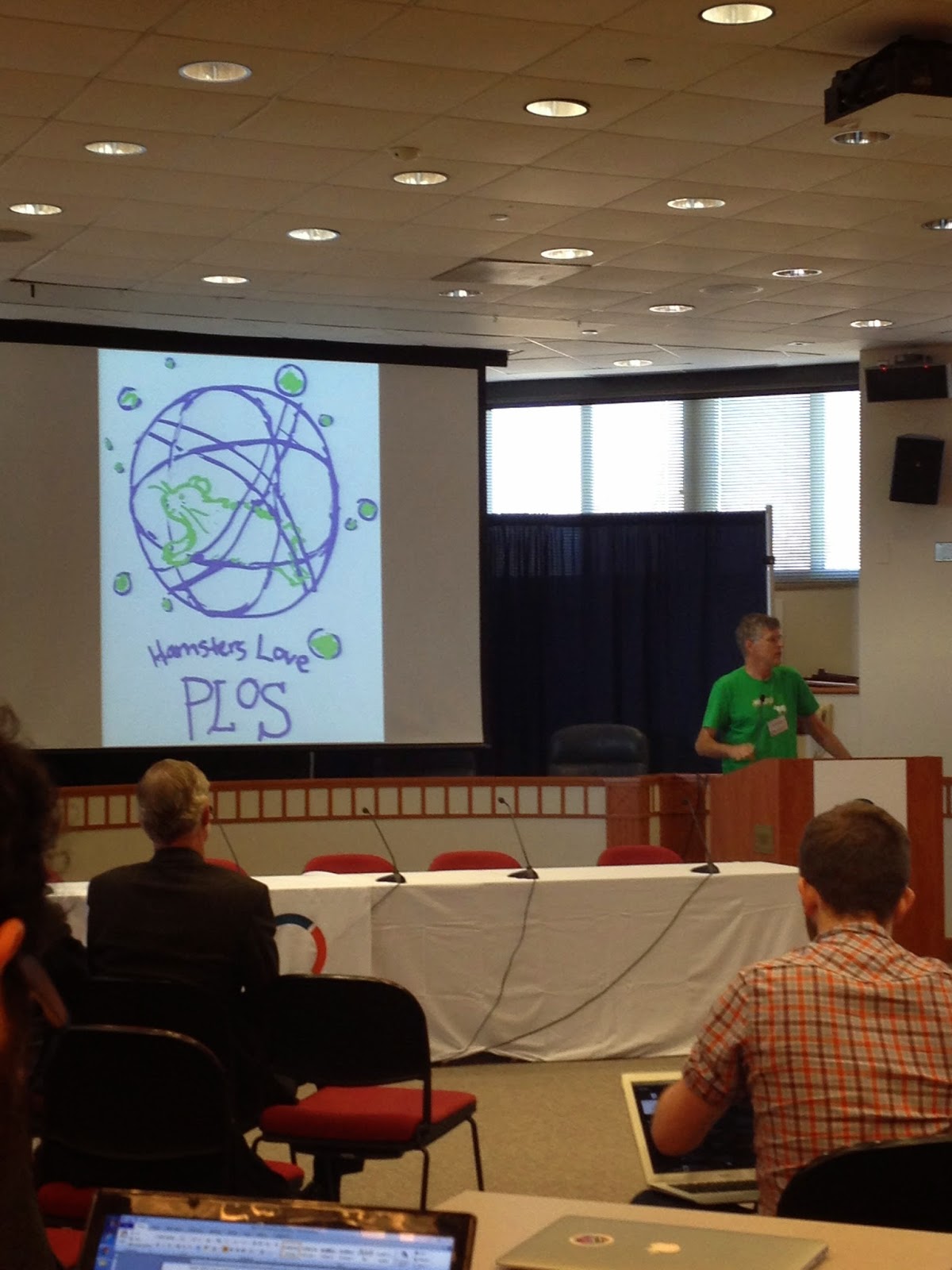
Co-founder of PLoS, Patrick Brown
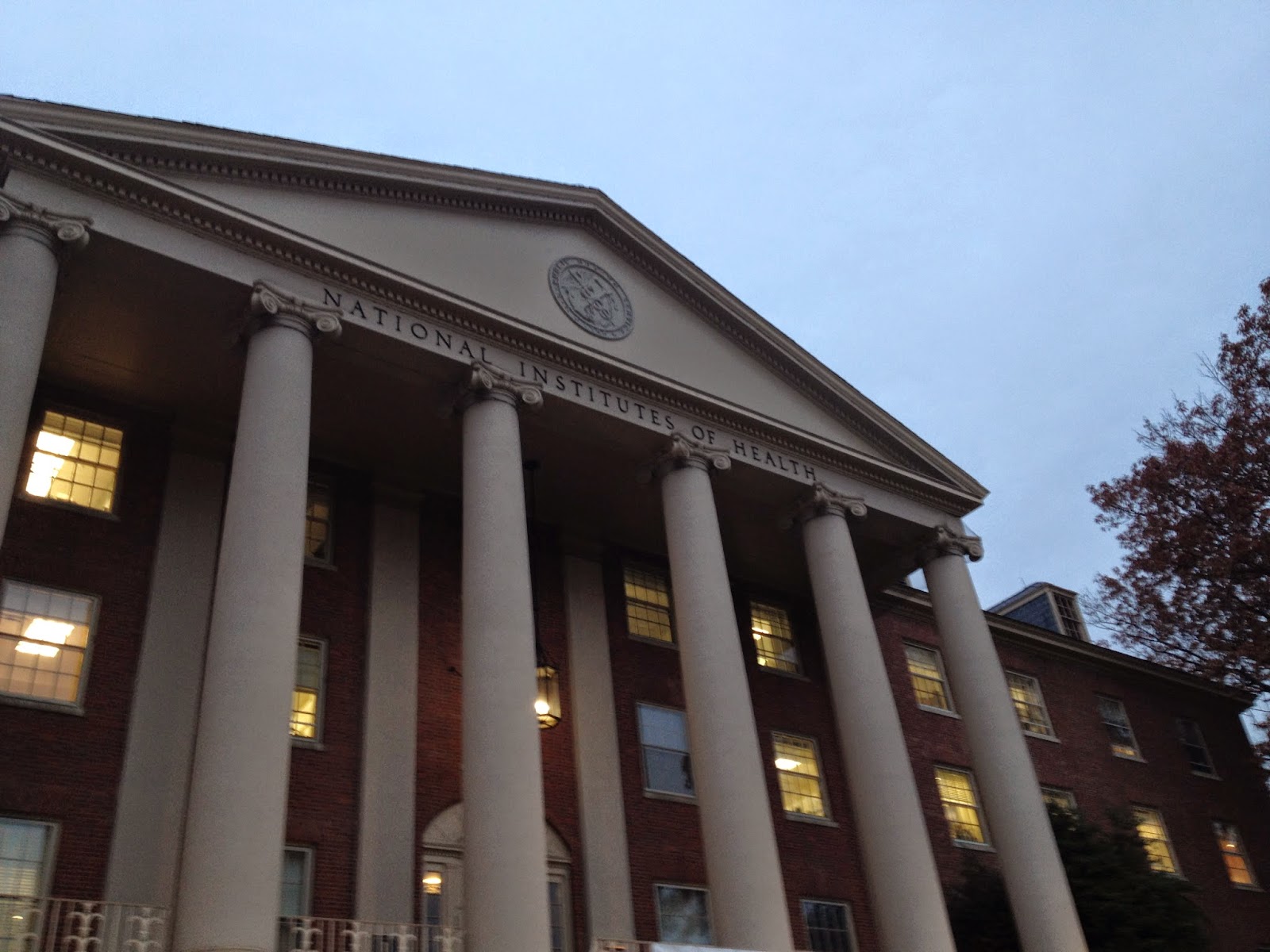
OpenCon2014 was an international meeting of 175 students and early career researchers from over 40 countries in Washington DC.  Over the weekend we heard some of the most compelling and diverse arguments in favour of Open Access, Open Data and Open Education from equally compelling and diverse speakers.  Highlights for me were Patrick Brown, Co-founder of PLoS (Public Library of Science, now probably the biggest completely open access journal) describing how he set up PLoS despite having no experience of publishing. Peter Murray-Rust described the potential of text and content-mining to actually maximize the potential of existing research.  And finally, one of the most affecting talks for me personally was by Erin McKiernan talking about what we can do as early career researchers (she is herself one).  We spent Monday on Capitol Hill meeting relevant political figures in the Senate. Wow. Directly lobbying HELP committee members. Awesome.  In the afternoon a group of us went to the National Institutes of Health (NIH – who fund most publicly-funded American research) to discuss ‘openness’.

I could go on about how amazing this weekend has been, how inspired I feel, how excited I am about the projects and plans we have for the coming year.


But I am also scared. For one thing, I realised the extent to which I know nothing about data management and access.  Yes, I am part of the ‘digital, internet generation’, and have no computer phobias.  But that does not mean I’m an expert.  My experience of software is pretty much limited to Word, Excel, Powerpoint and PDFs.  I have never worked on ‘code’.  Managing data is something I find incredibly challenging.  Organising my data so someone else can use it later on – well, where does one start?
In addition, I am not so much an early career researcher as an embryonic one.  I can still count the number of publications I have on my hands. And most of the time I am the middle-ish author.  How does one leverage preference over an open access journal when often these decisions are made when I’ve already moved on geographically, and when I’m authorship small-fry?  And when any publication at all is a requirement on a job application?
These are not meant to be excuses, and I have considered how I’m going to tackle all of these (a MOOC on data management, contacting my librarian at Yale and asking for help from OpenCon peeps re the former, and initiating early conversations and just being bold on the email front re the latter), but it just reflects some of the challenges facing baby researchers like me.  And if we’re the keen ones, for whom Open Access is a clear ‘Yes’, then I can understand how it seems too great a mountain to climb for less interested peers. 

The NIH
I guess the key is to keep the fear in check and just power on with the support of my fellow open accessers, and continue to spread the word.  I really believe that open access and open data is the only way forward, and not only that, it’s better than the current status quo.   I want my research to be useful to anyone who wants to read and use it, and not just those who can afford to do so. 

But despite any façade or game face, I am somewhat daunted.  So if anyone wants to help me on the journey, I’d be glad for the company.


(Also if anyone finds my scarf, it’s actually the only one I brought to the USA from home and it was one of my favourites.  My neck is henceforth very cold.  It is forest green with burnt orange flowers bought originally in Dublin.  If found, message me.  Kind regards, KRP.)

Tuesday, 19 August 2014

Open Access, Closed Door

Earlier this week, I got some exciting news - an article I wrote is going to be published! It's a small online journal with a teeny impact factor, but for baby doctors like me, it is great to just get some experience of the whole process.  It's an article on novel therapies for small cell lung cancer that I wrote for my Masters, if you're interested...

But here's the big hurdle: how to make it Open Access?


Now anyone who reads journals will be familiar with the difficulty of reaching journal articles stuck behind massive pay walls.  It's very frustrating - you find the article on Pubmed (other search engines are available) that promises to tell you everything you want to know about a topic, or explain the method for a certain experiment you want to do, or could outline a study you thought was novel but has actually already been done.  They problem?  You either have to hope your institution has access (that is, if you have an institutional affiliation) and if not, it's tough cheese unless you want to fork out some big bucks to read the article.  Which might turn out to be useless, but of course you don't know that until you've read it.

And this is all despite the fact that research is largely publicly funded and undertaken by scientists who get paid relatively diddly squat to do ground breaking research.  Journals are supplied with articles from said scientists, and then the refining and peer review process happens by other scientists in the same field who do not get paid to do so.  Most journals these days are predominantly read online.  So the main overheads for journals are for editing, formatting etc... Um... so why do journal subscriptions cost so much...?

Especially in the UK, there has been a real drive towards Open Access, and encouraging journals to make their publications freely available.  One method to cover the overhead costs is to charge a publication fee - and herein lies my challenge.  For a little journal like the one I'm publishing in, it still costs a few hundred dollars to meet that fee.

Who pays for that?  Me.  I pay for that.  Because institutions can often only support those who are funded through specific funding bodies who usually ring fence some of their monies for that purpose (e.g. Wellcome, RCUK).  This reflects well on these organisations, but you're a bit stuck if they're not your funders.

Doesn't this just become a thing where people who can afford to pay get stuff published (in this scientific world that is already ruled by a 'he who survives must publish' mantra?), thus devaluing the whole process into one driven by money?  And what about those in the developing world - how do their research groups publish in even the smaller journals with these kinds of fees?  And what hope is there of reaching some of the bigger, more expensive journals, who have much higher publication fees? And what about journals that are a mix of open access and pay-for articles - if you have to pay a subscription fee for the whole lot anyway, don't you just end up paying twice - once to publish and another to read?

I'm totally team Open Access, but it feels a bit like some journals are winning a game where old boundaries remain and new ones have been created.  Hmm.  I don't like those sorts of professional games.

As a complete aside and nothing to do with the above, my new-found employment freedom has given me a bit of brain breathing space which I didn't even realise I needed.  The kind of breathing space that actually winds you quite majorly when all those squashed parts of the soul get some air time.  Without wishing to get too heavy with you, dear blog reader, I will instead say that I can most heartily recommend such pauses, and share with you the view from the lake I went swimming in yesterday.  Pretty sweet, huh?

Wednesday, 23 May 2012

If you do one thing today...

.... sign this petition - It's a petition to Barack Obama demanding free access to publicly funded research.  It CAN be done!  It doesn't matter if you're not in the States, your petition signature still counts.  It literally only takes a minute.  If you're still not sure why Open Access matters, read some of my posts below or check out www.righttoresearch.org.

If I can fill it in from the UK in between the 'Childhood Developmental Dance Routine' (new and improved version) and making up yet another ridiculous rhyme for this, that or the other (just discovered a great one for Valproate side effects) then I have every faith that you can too!
Some 'light reading'

Wednesday, 2 May 2012

A bit of good news

One of my best friends got married recently, and I'm using his wedding cake as a reminder of happier things!

  You can read some joint BMA/Medsin writing on the PLoS blogsite about the recent respective conferences here. I'll quickly scribble about some Open Access developments to retain some non-revision writing.

Open Access is really, well, opening up, here in the UK.  Wikipedia founder Jimmy Wales is supporting the Government's plans to make research freely accessible on the internet.  David Willetts made the announcement today, noting that the government spend £5bn on research and could save millions by making research available to all.   Dame Janet Finch has been invited to report on how we can make Open Access a reality.  To have the Minister of State for Universities and Science making such a statement is a huge step forward for Open Access in the UK.  The report is due in the summer.

Not much more to say from me for now.  Apologies if I cry on you at some point in the next few weeks for something as innocuous as making me a cup of tea (this seems to be the current affliction of a lot of female final years at the moment!). Normal service will shortly be resumed. And I'd really appreciate the tea :)

Tuesday, 10 April 2012

Well Done Wellcome!

Having just returned from a family Easter trip, I've had plenty of time over the last few days to think about Open Access to research.  Then the Wellcome Trust absolutely leads the way and decides that all its research will be accessible to everyone.  During my year in London last year, I used to walk past that building almost everyday - how exciting that a body as eminent as the Wellcome Trust has taken such a massive leap step.

I know I've rabbited on about Open Access before, but the book I've nearly finished reading has given me renewed reason to reiterate its importance.  If anyone else has ever read 'A Short History of Nearly Everything' by Bill Bryson, perhaps you'll agree that an overriding theme that comes across is that science and discovery is as much about communication as it is about the actual thing that has been identified.  Discoveries have laid dormant for years, decades even, because the researcher wasn't a very nice person, or didn't explain it very well, or simply picked the wrong medium through which to tell the world.  The first of these - well, a good friend of mine once said that he made it his mission to always be nice to everyone, because you never know under what circumstances you may meet again (the medical world in particular is a frighteningly small place - plus, it's nice to be important but it's far more important to be nice!).  The second - let's hope all those communication skills we learn at medical school extend to the written word.  And as for the last - at least now we have things like conferences and Pubmed to spread the message, regardless of where the information is originally shared.  I suppose what I'm saying is - these things are all still issues now, perhaps (hopefully?) to a lesser degree than they were before.  What is truly laughable is the idea that having overcome all of those challenges (as well as the discovery itself), the greater population can't actually read anything about what you've done.  Imagine if Einstein's Theory of Relativity had been approached in this way?

We need universities to start opening the doors and saying YES to making the research they publish accessible to all.  Will they start being left behind if groups like the Wellcome Trust make their studies accessible?  Ultimately research is just one idea following another - ideas tend to flow more smoothly if you can have full access to the preceding ones.  
'Knuckling down'
It's just my luck that just as I have to really knuckle down to some finals revision that I want to jump up and down about Open Access instead.  Really excited about pushing forward with the great work being done by the Right to Research Coalition over the summer to get the message out to the UK's medical schools.  Watch this space!

Sunday, 25 March 2012

Open Access to Research

As a medical student, research is something we 'should' know something about, and 'should' use to develop an evidence based approach to our clinical practice.  We do our best to critically appraise the literature, understand what all the statistics actually mean and, fingers crossed, we'll be able to tell you at the end of it whether the research was any good or not.  

I certainly didn't give a great deal of thought to how we are physically able to access research articles.  It wasn't until I did some lab time of my own that I realised also that a lot of research means starting from scratch, because raw data from research studies stays within that research group.  

It was around this time that I became aware of the Right to Research Coalition (http://righttoresearch.org/) which is based across the pond, but we're working to get a base here in the UK for this important issue.  So what is Open Access and why is it important for research and clinical practice, and, indeed, global health and the international community?

When I want to read a research article, it's quite straightforward - I just log in to Pubmed either on campus or I log in from home.  Every now and again I'll hit a brick wall and be unable to access a relevant article. Has that ever happened to you?  Imagine that happened every time you tried to read any article you ever wanted to read.  Then think what research developments have happened in the last few months alone.  Aspirin to prevent cancer, laparascopic surgery for colorectal cancer, the pros and cons of new targeted therapies... Our ability to stay up to date clinically relies on our being able to read journal articles with ease; and yet some journals cost thousands of pounds for a subscription.  Great, if you are part of an organisation that does this for you, but not so great if you're not.  

Now, if you're thinking 'yes, but research is expensive and this is a way of paying for it' - well, research has kind of already been paid for, often by the government or charities.  We have a right to see this research.  A system that was never designed for profit has been made into one.  There are many more open access journals now, demonstrating that it is a sustainable business model.  

The problem isn't just clinical up-to-date-ness, it's also a question of making science accessible to all.  This blog explains the problem through the eyes of a scientist in India:http://poynder.blogspot.co.uk/2006/05/why-india-needs-open-access.html.  Simply, we are shutting off many countries of the world either from seeing what research is happening elsewhere, and therefore from being able to add to the knowledge base.  If we are serious about global health (and we should be), this needs to be addressed.  

Finally, it's also a question of making research more streamlined.  Just think - when you read a research article about something, you are told the aims and objective, the data is categorised and analysed and then you are told the conclusions of the study.  But what about the raw data?  That stays with the author.  Obviously this is also a question of research ethics and patient confidentiality, but what if that raw data could be accessible to other research groups rather than having to start from the beginning? 

I'd urge you to check out some of the links above if you're interested:
www.righttoresearch.org
http://poynder.blogspot.co.uk/2006/05/why-india-needs-open-access.html

What do you think about Open Access?  Have you heard of it before, do you think it's a good thing?

Karin