This is who you're reading about

My photo
Wilkommen to my blog - my name is Karin Purshouse, and I'm a doctor in the UK. If you're looking for ramblings on life as a cancer doctor, my attempts to dual-moonlight as a scientist and balancing all that madness with a life, you've come to the right place. I'm training to be a cancer specialist, and am currently doing a PhD in cancer stem cell biology. All original content is licensed under a Creative Commons Attribution 4.0 International License.
Showing posts with label leadership. Show all posts

Tuesday, 6 March 2018

Registrar Reflections

Happy new year, bloggers!  Or rather, Happy Spring!  As ever, I've been a bad bean at keeping up with things.  Updates from my end:

- I'm a Medical Oncology Registrar - yikes! (i.e. the last bit of my specialist cancer doctor training)
- I'm heading back to the homeland - wowsers! (i.e. I got a Clinical Lectureship in Scotland to facilitate ongoing nerding out alongside clinical training with mountains in situ!)
- I said 'yes' to getting married - woohoo! (I'm not sure this one needs explaining...)

So it looks like 2018 is going to be a busy year.  But the first of those three things is the main thing keeping me entertained at the moment.  People say becoming a registrar is the scariest step up after qualifying from medical school in the first place.  Seems to me that makes it an important experience to reflect on, and four weeks in, here are my early thoughts on being a new registrar.

1) People are a lot nicer to you when you're a registrar than when you're an SHO.  Not that they were horrible to me before.  It's just a totally different vibe, both within and beyond your department.  Within my department, everyone has been supportive and helpful, offering help and general wisdom.  Beyond my department, people are willing to hear you out with a kinder word.  I guess it's just a general conveyance of being wanted.  Something I will definitely reflect on in my interactions with junior colleagues. 

Disproportionate excitement at having my own one of these.  

2) It actually feels like I'm being trained to be a specialist with specific skills and knowledge, rather than a bum on a seat that will learn things by osmosis.  It's really made me think about the point of middle-stage training - in my case, Core Medical Training.  I've been a doctor for nearly 6 years, but I'm pretty sure this is the first time I've started a clinical job and felt like I haven't been chucked in head first in hopes that I'll just work it out. It's also the first time I've had a desk!  And a locker!!!

3) It's quite scary that people take your word so seriously.  But that's part and parcel of getting more responsibility, right?

4) There are a lot more men than women the higher you climb up the ladder. 

5) Associated with being higher up the ladder - it does not stop you getting a lot of advice you didn't ask for.  I've been pondering if this is an issue suffered more by female professionals, because I don't recall my male colleagues ever grumbling about it.  Don't get me wrong - I am in serious need of help, wisdom, support and advice, particularly at this juncture of my professional life.  And to an extent I probably don't know what I need to know, and should listen to random nuggets of advice.  But I'm getting a little tired about being given advice about work, life, work/life balance, family life, social life etc etc... without being asked about my background in any of these areas. 
Seems apt at this point to give kudos to my last Educational Supervisor, who, three years ago, spent the first few minutes of our introductory session getting a summary of my life so far.  Meant that when he did give me advice, it felt like it meant something and was actually relevant (and it was indeed life advice I think I'll remember for a long time to come).  Again, something I will reflect on moving forward. 

6) Also I need to chill about the whole 'unwanted advice' thing.  It's always well meant.  I think.  And it's going to keep happening.  I think.  So might as well not raise my blood pressure over it. 

7) The main difference of moving from generalism to specialism is the loss of one's barometer.  I feel like in general medical situations I'm pretty ok at feeling it out - you know, 'bad' versus 'not bad', and knowing when to worry versus when to be reassured.  When you move to becoming a specialist, your barometer is not yet fully formed.  I'm sure it will, in time.  Right now I feel like I'm anxious pretty much all the time, and asking a thousand questions.  But I think it's probably better to be neurotic at this stage of things that over-relaxed. 

No #snowmaggedon will stop me getting to work...
8) I'm not terrible at this.  I did my first 7-day stint as the oncology registrar on call recently, which involved being the acute oncology ward registrar as well as taking referrals/giving advice all over the region and making admission/discharge decisions through the oncology triage unit.  It was full-on information overload, with my bleeps, mobile phone and emails all going off, often simultaneously, in addition to nurses and junior doctors coming to me with problems that needed solving.  Going home at night-time over the weekend knowing my phone could go off at anytime was a whole new experience.  I didn't do it all perfectly and there is a LOT of room for development - but I did it.  There were no tears, we even had a few laughs.  When one of the F1s said I'd been a good registrar, I wanted to hug her.  I left thinking 'I can do this'. 

There will be many nerve-wracking 'firsts' over the next few weeks, but I'm going to have to embrace the familiarity of these emotions.  I KNOW what it's like to be absolutely terrified - my first week of nights as an FY1 (= intern) I basically didn't sleep for terror, and cried after almost every shift.  I've got to take some confidence from the fact that I've come so far from those scary days.  Plus I think a lot of the nerves comes from being a perfectionist.  Not an awful quality, as long as you keep it in check...

Also high fives and hugs to Mr KP and friends who have provided important moral support.  Maybe that's the difference - it's much easier to go to work and do your thing when your house is in order (metaphorically as well as literally).  Yippee!

Tuesday, 10 January 2017

#openconmed - or - Open Access for doctors, medical students and associated interested parties!

Happy New Year, folks.  As I'm doing research at the moment, we were lucky to have a family filled festive season, although returning to work is somehow more painful after you've had two weeks off!

Walking in the wilderness of publishing...
Doctors are part of our own sort of family though, and nowhere was this more evident than in the inaugural OpenCon Community Call for Doctors and Medical Students at the end of last year.  When we started running OpenCon Community Calls in 2015, we hoped it would bring an amazing community of Open Access, Data and Education fanatics together between major events.  It's been a privilege to be part of this community of motivated, visionary researchers, librarians, students - people who believe that we can drive change in academic publishing. 

Doctors, and the medical profession as a whole, are often cited as being THE group who need access to publications.  Put simply, without access to research and review articles, we can't see the evidence which informs our clinical practice, which means we can't provide the highest quality care.  But my experience of being involved with the Open Access movement since my medical student days is that there's a major drop off in involvement once medical students become fully fledged doctors.  Where is the medical voice in Open Access? Most doctors I speak to have never heard of Open Access, and those that have are usually research types who have funding which, in the UK at least, increasingly requires publications to be published openly. 

Why is that?  When I explain to my doctor colleagues about Open Access, they agree that it's a big problem.  They've often just not thought about it before.  We're used to hitting pay walls.  Perhaps many/(most?) doctors, especially junior ones, rely on hospital protocols rather than looking for the evidence themselves, but one day these junior doctors will be senior ones.  Then, we'll be the ones making the protocols, the review summaries, the trends by which our junior doctors will practice.  What do we do then if we've never looked into things for ourselves?  And of course this problem is even more acute in the developing world, where walls are being hit left right and centre.  Why has this community not been more vocal then? Lack of time, I think!  When I'm working clinically, I feel like I'm firefighting to keep going - being a doctor is only 50% 'being a doctor' - the other 50% is audits, exams, portfolio.... etc etc.  There just isn't time.  There also isn't spare money to pay Article Processing Charges (APCs) to make things Open Access - as we're not funded by research bodies, if we publish something it's in our 'spare time' with our own funds. 

This community call was designed to bring this important group of people together.  I'll admit, I was a bit nervous.  I appreciate that it's quite daunting to talk to a group of strangers in person, let alone online.  But I needn't have worried - doctors are generally a chatty bunch! To start with, I was amazed by the geographical diversity of the participants.  New Zealand, Germany, USA, Benin, Kenya... to mention a few.  After some initial chatter about how the issue of Open Access affects us in our respective countries, we heard about some of the projects and workshops happening in various corners of the world.  It was great also to share tips and resources, such as PubMed Central and the Open Access Button.  So much great work is already happening out there, and it was the perfect opportunity to connect people who can help each other with policy and advocacy work, organising events and how to engage our local medical communities. 
We walk together, and we walk hopefully!

Some examples - we heard about a workshop where Public Health emergencies such as the Ebola Crisis were used as the basis for a discussion about Open Science in Global Health.  We heard about a Hack4Health event which aimed to bring the IT and health worlds together to synthesise digital solutions to the problem of open-ness.  There is amazing work happening all over the world and the message was always the same - we need more people to get involved, more ideas, more input.

You can check out the full minutes here - I left our call feeling heartened that there was an enthusiastic community out there, and we were creating a home for it together.  It is vitally important that those of us at the relative infancy of our medical careers see ourselves as game changers in the research and publishing world.  I'm excited to see where it takes us!

Sunday, 21 June 2015

Justified - the Case for the Doctoring Gap Year

Clinton, CT.
Well blimey, here we are. My last week in the lab! Time to pack up my pipettes and hand them on to someone else, and leave Gary in the hands of my successor to find out all of his secrets. In many ways it has felt like all of the pain of starting a PhD without actually having done one - but perhaps a good omen for if/when the time comes that I've still come out smiling! But finally it is starting to feel like it's time to return to the green pastures of England, and back to my beloved stethoscope. Saying goodbye over and over again is exhausting, as is squeezing every last second with final defining moments rather than planning new ones - which most recently include sun basking in Boston's beautiful public gardens, dabbling my toes in the sea off the Connecticut coast and finally trying my first lobster roll. I am assured this is a feeling common to all temporary emigres - but that doesn't mean I won't be PHENOMENALLY sad to leave.

Boston Public Gardens, MA.
I guess it should be the time to become profound, but to be honest, it's been such an overwhelming couple of weeks, on top of, well, a VERY overwhelming year, and I think it will take me many months on my return to even begin to process it all.  So I won't try here and now!

I know that sounds overdramatic, but what the hell - I left my job, my friends, my family, and potentially my career, with many, many months of uncertainty and put all my eggs in the American basket on my own.  But hey, I did it - and it's been a blast.  I left my little island in exchange for this massive one, and created a life from scratch whilst learning to do a new job.  It was most certainly not always easy - perhaps the easiest way to describe it is that despite leaving home nearly a decade ago, having embraced backpacking at every turn and working as a doctor for two years, this is the first time I feel anything vaguely resembling An Adult (emphasis on the 'vaguely').  Living abroad means having no back-up plan when it turns out you're going to be homeless, when your bank card gets defrauded and you suddenly have no money because everything has been blocked, and dealing with every single personal and professional disaster on your own.  I have FAR from done it all correctly and perfectly but in many ways I feel ruined for life, because I think unless you've lived abroad, it's a complex bunch of emotions that are hard to explain (and I worry that makes me sound a bit of a travel snob).  Why should a junior doctor take a gap year, especially one that doesn't involve doing any clinical work?  Living abroad makes you resourceful and self sufficient, because you have to be, and extremely humble to your own fallibility.  And I made Gary, and who knows, maybe one day I'll prescribe a drug that Gary helped to identify! I think those are enough good reasons to do it (re. fallibility as per the famous report) although there are many more yet to reach the 'conscious' layers of my brain!  Of course I was never really 'alone' - I am ever grateful to some key people who have been Extremely Important along the way.
Solitude - the lot of the emigre!

Three cubed on the
High Line, NYC
Jeremy Hunt probably SHOULD be alarmed, because all the baby docs such as myself that have taken time out have certainly come to appreciate that life as a junior doctor does not have to be the exhausting treadmill we thought it might be, and that a bit of pick'n'mix career-wise makes us better, saner doctors.  Amongst my friends alone, we have covered every continent (except from Antarctica) during our medical gap years - from relatively well trodden routes to Australia and New Zealand, to being an Ebola doctor in Sierra Leone, a paediatric PhD student in India or an expedition medic in Mexico.  It has been my very great privilege to share multi-time-zone Skype chats with friends I have known nearly a decade now from medical school who have taken their stethoscopes and explored the world.  Of course, I am equally chuffed for friends who have taken the alternative adventure route of setting down roots and starting families, one of whom I will be lucky to be going to a music festival with (27 weeks pregnant!) in a few weeks' time.  Adventures come in many forms, as my jewellery collection reminds me every day, but I know I have been incredibly lucky for this to have been mine.

From Toon to Tamil Nadu and now to NYC!
Dr P and Dr P. 
Amidst all of that, this ancient creature turned three cubed with some truly excellent and special people from all parts of her British and American life - feel a bit gushingly lucky. I'm not really one for material presents, but was lucky to be gifted some lovely scribbles in notes/cards, a mountain of books and a pair of awesome-ly crazy trousers. And if that sums me up in a nutshell, I'll take that.

And with that, I'm off to spend my final days with my best guy, Gary the Clone, whilst continuing the stream of goodbyes and pack my bags for my final American adventures, this time on my own.  Normally the most sociable bee you can imagine, I actually can't wait for some quality time on my tod.  Mountain of books - check.  Paints (<100ml for the flights!) - check. Journal - check.  Crazy trousers - check. Blog pals, I'll be back: “The adventures first, explanations take such a dreadful time.”  Dreadful?  Not dreadful.  But they do take time!  

Thursday, 11 June 2015

The Trouble with Girls?

Burlington, VT - although I liked 
seeing the real thing in Machias, NY!
The one point on which I have failed spectacularly to leave my homeland behind is radio - sorry, NPR, I just can't seem to tear myself away from the BBC and particularly its podcasts.  They have been my constant companion through long lab days, making me laugh embarrassingly loudly at its Friday Night comedy shows (which obviously no-one here finds funny, with the subtleties of British life and humour not relevant to the USA at all - but I can highly recommend!) or short novels which run the perfect length of a protein assay.  

There may not be obvious connections with the things I am about to discuss - but bear with me!  Because I'm somehow going to try and connect Sir Tim Hunt's comments on 'the trouble with girls' in laboratories, the United Nations, a BBC World Service book club podcast about a book on Afghanistan under the Taliban and Emma Watson of Harry Potter fame - and why men and women should both be championing equality for their own benefit.  


How could I NOT write a blog post about the absolutely hilarious story that hit the news - ladies of science, tie up your luscious locks, cover up your bikinis and put some long, sensible trousers on, because apparently we are a BIG DISTRACTION in the lab (and don't get all weepy about it in the process).  

Places to be young and grow old :)
Hilarious, but perhaps a serious point to be made.  Lordy knows there aren't enough glass ceilings without eminent scientists such as a Nobel Laureates stating that the problem with women in the lab is that everyone falls in love with each other whilst the women go about crying all the time.  Workplace romances are obviously, clearly, not the select store of laboratories, and hey, I have not cried once about work this year - not a claim that can be made of my job in healthcare!  But anyway - I'm (hopefully?!) stating obvious points here - people fall in love in all kinds of workplaces, and women are not cry babies, thank you very much.  Why do the women have to leave?!


Brewery Tour 2015 - possibly #1 so far...? Switchback, VT.
Obviously his comments were based on women in labs, a world where there is generally (or from what I have experienced) equality.  But his comments are rooted in perceiving the weakness and fragility of women.  Despite this, around the world, women are much persecuted because of societal or religious notions of what they are supposed to be doing - and staying mighty strong in the process.  It rather puts any whining I've done about being a female doctor or whatever into perspective, knowing and simultaneously resenting that I feel 'lucky' to have grown up in a society that broadly respects women as equals.  Although people can express gender equality as an aspiration on morality grounds, when I went to the United Nations those many weeks ago, we were lucky to listen to an amazing talk by a representative from the (deep breath in) Office of the Special Representative of the Secretary-General for Sexual Violence in Conflict.  It was really quite amazing the evidence she presented, economically, for gender equality and the role of women in society; I mean, obviously sad that some people need this kind of persuasion, but the depth and strength of the arguments were ones even I, as a woman, had not considered.   Yasmina Khadra's discussion of his latest book, The Swallows of Khabul, in one of my favourite book club podcasts to date had me compelled throughout - a book which has some centre on the experience of women under the Taliban, but is very much explored through the perspective of the society, and men, that exist around it.  But - I found particularly moving the author's description of his personal response to the part of the book he found most difficult to write about. 

I would like to live here, please. Littleton, MA.
This reaction towards this, and his general mega-respect for women expressed throughout the podcast, made me think on Emma Watson's talk on gender equality, which I realise has its critics, but I happen to be a big fan of - mainly her section on gender equality being an issue for men as well as women.  A great little excerpt:

'Both men and women should feel free to be sensitive. Both men and women should feel free to be strong… It is time that we all perceive gender on a spectrum not as two opposing sets of ideals.'


I have written/spoken previously of my experiences as a female doctor or 'leader' (sorry that just sounds so cheesy...) - but even as I wrote those things it felt almost fraudulent to talk just about my experience of these things As A Girl, as if I was missing something.  As 'Hermione Granger' (currently my hair icon...) points out, exemplified by perhaps both Sir Tim Hunt (even if he didn't intend to do so!) and Yasmina Khadra - why must we focus on female habits to be weak and meek, while men are strong, thereby allowing neither to be the other?  In my role as a doctor, and generally in life, I think it is important I am allowed to be both, and my male counterparts to be the same.  Increasingly I realise when I was writing about being a female doctor, perhaps I should have been thinking more about gender equality for both sexes.

Reading back this blogpost, I am led to feel it's rather a swirl of thoughts rather than successful crafting of specific ideas and conclusions.  Another thing to add to the seemingly endless list of things to process from all I have explored during my time in the USA!

In other news, this weak, fragile (!) woman wishes she could chop herself into a few pieces and distribute them in several corners of the world right now - India, Oxford, Wiltshire, Newcastle, and wrap a few hugs around some key people that she is missing a very great deal (despite any game face to suggest otherwise).  But until then, back to the lab - there is nothing #distractinglysexy about lab work - perhaps something to consider for those who read Sir Tim Hunt's comments and were considering a career switch to get in on the action...

*puts her sexy wide-rimmed spectacles back on*

Addendum (21st June 2015) - Given the media storm that has followed the comments made by Sir Tim Hunt, I just wanted to add my personal view given the events that have followed, light hearted as this post was intended to be at the time of writing.  It is my personal feeling that his comments were not made in the serious belief of the inferiority or weakness of female scientists, having since read more details about the whole situation, although undoubtedly his comments were ill-advised (as he has acknowledged).  This blog is not written by an angry feminist (more a positive one!), and I somewhat disagree with the heavy handed-ness Sir Hunt's comments provoked as I feel it rather closes the door for discussion around the genuine challenges facing scientists or doctors where gender or indeed any discriminator are concerned.  That was the spirit in which the above post was written.  

Sunday, 16 November 2014

Concepts of Open-ness - OpenCon 2014

I left my scarf in the cafeteria at the US Senate on Capitol Hill.

Well, there’s a sentence I never thought I’d say. 

It was not the only surprising and overwhelming thing that happened at OpenCon2014, an open access conference for early career types like me. 

Appreciating that readers of my blog are a mixed audience (seriously, message me, because I would love to know who you are!), open access is all about making research openly available.  It is the strangest thing that research which is publicly funded is then submitted to a journal, whereupon it is peer reviewed for free by fellow scientists (for no reward, professional or otherwise), and somehow it gets spat out the other end with a price tag.  And a hefty one at that.  Of course there are some editing costs.  But when even Harvard University is struggling to pay for the rising cost of journal subscription, it’s a clue that something is wrong. You can read about Open Access on some of my other blog posts. 

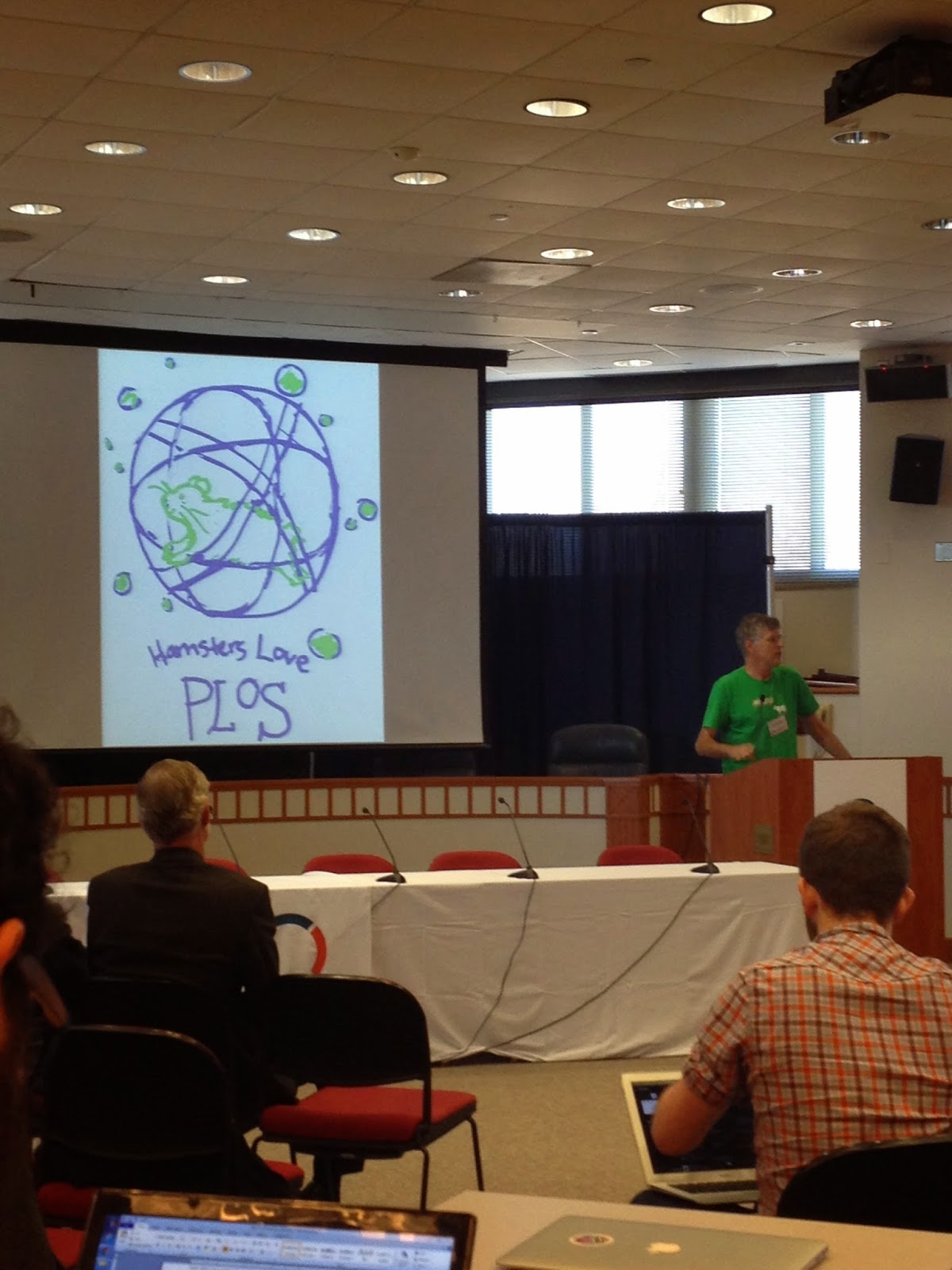
Co-founder of PLoS, Patrick Brown
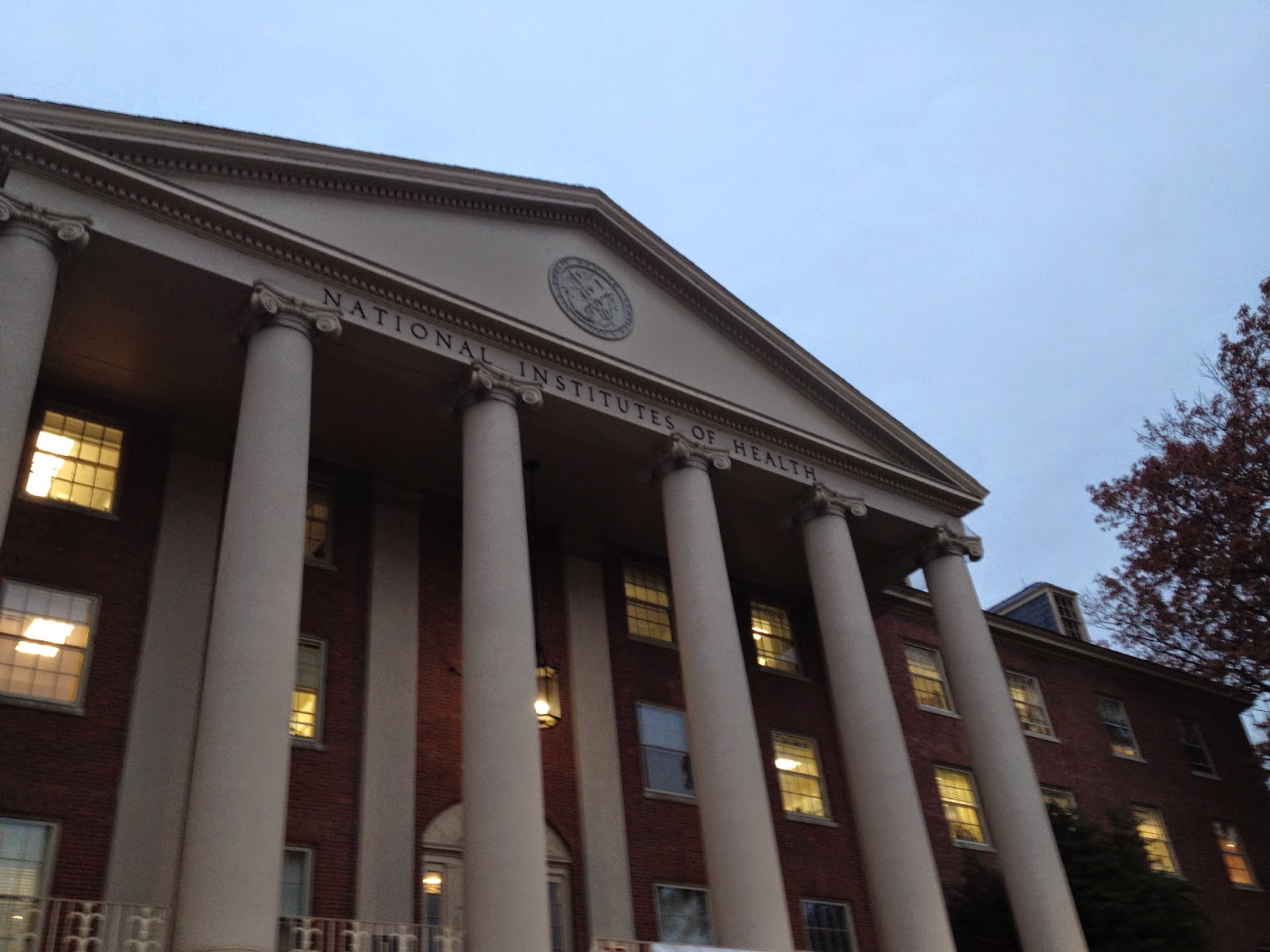
OpenCon2014 was an international meeting of 175 students and early career researchers from over 40 countries in Washington DC.  Over the weekend we heard some of the most compelling and diverse arguments in favour of Open Access, Open Data and Open Education from equally compelling and diverse speakers.  Highlights for me were Patrick Brown, Co-founder of PLoS (Public Library of Science, now probably the biggest completely open access journal) describing how he set up PLoS despite having no experience of publishing. Peter Murray-Rust described the potential of text and content-mining to actually maximize the potential of existing research.  And finally, one of the most affecting talks for me personally was by Erin McKiernan talking about what we can do as early career researchers (she is herself one).  We spent Monday on Capitol Hill meeting relevant political figures in the Senate. Wow. Directly lobbying HELP committee members. Awesome.  In the afternoon a group of us went to the National Institutes of Health (NIH – who fund most publicly-funded American research) to discuss ‘openness’.

I could go on about how amazing this weekend has been, how inspired I feel, how excited I am about the projects and plans we have for the coming year.


But I am also scared. For one thing, I realised the extent to which I know nothing about data management and access.  Yes, I am part of the ‘digital, internet generation’, and have no computer phobias.  But that does not mean I’m an expert.  My experience of software is pretty much limited to Word, Excel, Powerpoint and PDFs.  I have never worked on ‘code’.  Managing data is something I find incredibly challenging.  Organising my data so someone else can use it later on – well, where does one start?
In addition, I am not so much an early career researcher as an embryonic one.  I can still count the number of publications I have on my hands. And most of the time I am the middle-ish author.  How does one leverage preference over an open access journal when often these decisions are made when I’ve already moved on geographically, and when I’m authorship small-fry?  And when any publication at all is a requirement on a job application?
These are not meant to be excuses, and I have considered how I’m going to tackle all of these (a MOOC on data management, contacting my librarian at Yale and asking for help from OpenCon peeps re the former, and initiating early conversations and just being bold on the email front re the latter), but it just reflects some of the challenges facing baby researchers like me.  And if we’re the keen ones, for whom Open Access is a clear ‘Yes’, then I can understand how it seems too great a mountain to climb for less interested peers. 

The NIH
I guess the key is to keep the fear in check and just power on with the support of my fellow open accessers, and continue to spread the word.  I really believe that open access and open data is the only way forward, and not only that, it’s better than the current status quo.   I want my research to be useful to anyone who wants to read and use it, and not just those who can afford to do so. 

But despite any façade or game face, I am somewhat daunted.  So if anyone wants to help me on the journey, I’d be glad for the company.


(Also if anyone finds my scarf, it’s actually the only one I brought to the USA from home and it was one of my favourites.  My neck is henceforth very cold.  It is forest green with burnt orange flowers bought originally in Dublin.  If found, message me.  Kind regards, KRP.)

Thursday, 16 January 2014

SWIMS Inaugural Conference

It's happened.

The moment we've all been waiting for….

The SWIMS Inaugural Conference.

For those of you new to the scene SWIMS - that is, 'Sensible Women in Medicopolitics and Medicine Society' - is for female medical students and doctors who say NO to negative stereotypes of what is required to be a successful female physician/scientist and say YES to championing the positive female role model in these positions. A big part of this for me has always been the 'non-formal' time you have together, to share your experiences and have a good old dollop of reflection.

Of course, a wood burner and a pair of wellies go a long way to making this an even more excellent activity.

It was a real privilege to spend the weekend with a group of ladies who have gone from being work colleagues to good friends. These things are always particularly valuable when things are challenging - I am absolutely loving my lab work at the moment (despite the fact nothing is working. Or as my supervisor put it: 'Things aren't working… but at least they're not working quickly!') but the balance between this and the clinical bits that need to keep ticking over is tough to say the least. I'm currently trying to balance full days in the lab with one-and-a-half quality improvement projects, an audit that needs tying up and psyching myself up for round two of my post-grad medical exams.  Alongside a part-time Masters and funding applications for next year, and that's before you even address your personal life, it's a little mind boggling. The phrase 'jack of all trades, master of none' springs to mind.

It's no secret that combining a clinical and a research career can be difficult, not forgetting all my favourite female challenges and this kind of media nonsense, but sanity seems a long way away.  I guess it feels doable when you feel so passionately about each of the things you are doing. The creative joy of learning in the lab is cleaning out my brain nicely, and learning to juggle is something you just have to get used to.

And hey, this is what SWIMS is for - how do you balance all these things? I think crucially, part of the balance is making sure you leave time for things like our lovely conference. Which I hope you've gathered by now was not so much a conference as a chance to catch up with excellent friends.


Big love to my fellow SWIM-ers


Saturday, 16 November 2013

Come SWIM!

It has begun.

'Oh (cue eyes rolling), what's happened NOW? Big deal, you're a female doctor.'

'I know, I thought so too, but this thing happened at work…'

'Can't you take a joke?' or 'Some people just have those views, we can't change them' or 'you'll just have to put up with it' or 'it's not a problem these days, it's not the 19th century!'.

And there. In one full swoop my ovaries and I have had enough. And some of my friends agree.  I hereby introduce you to: Sensible Women In Medicopolitics and Medicine (SWIM). Because we're not bra-waving feminists, or shouty-shouty whiners; we're just championing the awesome women who have gone before us, and the women we hope to be as we progress up the medical ladder.

The Guardian's list of top 100 women in Science and Medicine is indeed inspiring, but just one click away is the rather more depressing list of occupations where the pay gap is at its greatest - and doctors aren't faring so well. There is nearly a 30% difference in pay between male and female doctors.

I'm guessing but I'm pretty sure a lot of this is to do with many women not ascending up to the upper echelons of the medical command chain. Part of this may be rooted in early experiences of medical leadership. I became involved (heavily) as a medical student with the British Medical Association (BMA), and apart from anything else, it gave me a belief in myself that I previously lacked. When I chaired the medical students committee, I constantly worried that I was letting people down, despite amazing support from all and sundry, not least the BMA.  But at the end of it, I could honestly say I had been myself from start to finish and that it had been something resembling a success.  I realised I had to change my attitude and get positive.

Perhaps as women we lack that self belief? Why?

I think there are two crucial factors in women putting themselves forward. One is the 'tap on the back' - I would never have stood for that BMA post without that prod. Maybe one tap-on-the-back is all it takes, because after that you realise that without throwing your hat in the ring, you'll never get anywhere. Since then, I give everything a go, no matter how insane or beyond me it seems. Often I fail, but sometimes it pays off, and the experience is always valuable.

The other factor is the role model/mentor figure. I think (and perhaps I'm being controversial) there are two types of female role model - the 'look-I-made-it-in-a-man's-world' type, and the 'I'd-invite-you-round-for-dinner' type. I know which I prefer, and I've been extremely lucky already through my thus-far brief medical career to have known or observed many of the latter. It is extremely inspiring to observe women who are intelligent, eloquent and passionate about their subject, but ultimately also still human beings, who have made the most incredible contribution to medicine and science.

That's all very well and good, but what about us kids at the bottom of the ladder? This is where SWIM comes in. We believe in starting early with a positive vibe where leading the troops is concerned. We believe in being positive role models ourselves, recognising that everyone has the potential to be someone else's role model. And frankly we believe in a happy, healthy life and career.

Don't hesitate - become a SWIMer today!
Not sure how 'sensible'… ahem...