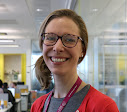
This is who you're reading about

My photo
Wilkommen to my blog - my name is Karin Purshouse, and I'm a doctor in the UK. If you're looking for ramblings on life as a cancer doctor, my attempts to dual-moonlight as a scientist and balancing all that madness with a life, you've come to the right place. I'm training to be a cancer specialist, and am currently doing a PhD in cancer stem cell biology. All original content is licensed under a Creative Commons Attribution 4.0 International License.
Showing posts with label junior doctor. Show all posts

Thursday, 2 April 2020

Roofs and Redeployment

At the time of writing, nearly 30,000 people have been diagnosed with COVID19, and just over 2,300 people have died in the UK.  The NHS has done the biggest reshuffle in its history and my card has been dealt - redeployment is finally here. 

I'm shortly going back to the cancer department, 8 months after I paused my clinical work to start a PhD.  The overarching emotion is relief.  There's also decent dollops of guilt (at the worry it causes my family, and at the time I've been out of the clinical game), anxiety (will I know what to do?) and a general sense of overwhelmedness. 

As discussed, Mr KP works as a doctor in the Emergency Department, so we've already started a system of minimising the risk at home as best we can.  We've established a COVID19 decontamination area in our house, and a system of cleaning our clothes and ourselves when we get home.  We've dug out old pairs of scrubs which we've previously debated throwing away - thank goodness we didn't! - so that I have something to wear when I'm on call (oncologists generally just wear office clothes... until now!).   Like a hospital, we now have COVID zones, just within our own house! 

So much of this feels like mental preparation - personally, that means avoiding the news. Apart from the fact it doesn't change my management plan (I'm still going to be socially distancing... I'm still going to go back to the hospital...), often it's hard to watch the hype.  For example, the hype around escalation and resuscitation decisions.  I think this speaks more to the fact we need to talk about this more in non-COVID times if its headline news that intensivists have to make reasoned decisions about who will benefit from intensive care.  This is no more true now than it was before, although admittedly we all worry about these decisions becoming more challenging.  Perhaps we, as a medical profession, need to learn how best to convey that in times of peace as well as times of war. 

I'm stumbling over the kind messages of support from everyone at the university.  It's quite overwhelming when people keep saying they are proud of you when you haven't even done anything yet.  I certainly don't deserve any praise; it's my clinical colleagues who have been managing the daily changes in policy, rotas and ward movements.  My only positive contribution has been towards a UK-wide coronavirus cancer monitoring project - an attempt to learn as efficiently as possible from cases of covid affecting patients with cancer.  It's been amazing to see a project like this, one that would normally take reams of paperwork and months of admin, get off the ground in a matter of days.  It's reflective of the ability of how the NHS has adapted like never before. 

My PhD swansong will be Journal Club - it has felt somewhat surreal preparing a figure-by-figure analysis of a paper about genetically engineered stem cells whilst simultaneously joining webinars to refresh my understanding about clinically managing COVID.  Maybe someone in journal club will ask me about identifying bilateral pneumonitis on a CXR, or how to interpret an ABG, or vice versa someone in the hospital might want to know about intratumoral genetic heterogeneity?  Unlikely, but a girl can hope!

Life goes on - we've just discovered that our roof will probably require major repairs in the imminent future - and I've got no idea when we'll have time to resolve it.  In reality, it's just going to have to wait until we're the other side of this.  But we're very fortunate - not least to have jobs and ones that keep us busy at that, which I realise not everyone are lucky enough to have. 

So wish us, and our roof, luck.  Fingers crossed we all keep it together in the weeks ahead.

Saturday, 29 December 2018

All That is Cancer Is Not Lost

Merry Christmas and Happy New Year, folks!  Phew, the last 4 months have been...well... crazy.  We've moved across the country, new jobs, planned a PhD (ish), moved house 3 times, bought a house, planned a wedding.... I can't necessarily recommend doing all of these things simultaneously, but equally doing so much 'adulting' in a short space of time feels like something of an achievement!

The cherry on this life cake was that I drew the short rota straw and was on call on Christmas Day - maintaining my 100% clinical Christmas working record!!  However, I really can't complain - for one thing, as ever, festive cheer was in great supply and I even met Santa :). And secondly, I was able to 'leave the building' and do the remainder of my 24 hours on call from home.  That means phone calls at 3am, but it also meant Christmas dinner courtesy of Mr KP!

A lot of being 'on call' for oncology involves being called by other doctors from essentially any clinical department for advice - A+E, GPs, any medical or surgical specialty, intensive care, etc etc.  We are often asked to give a view about prognosis and expected outcomes to help them guide their decision making. Prognosis is really hard to gauge, particularly at the end of the phone, sometimes in the middle of the night.  Clearly at my stage if it's unclear I'll seek higher wisdom.  But my main take home in the year I've been an oncology registrar is this:

  • Metastatic cancer does not mean someone is at the end of life.  In some cases, they are still curable.
  • Palliative treatment does not mean that someone is at the end of life.  
  • Palliative treatments (yes, plural, for many cancers) can significantly extend life, and quality of life.  
  • Patients with metastatic cancer on or considering palliative treatment can, in some cases, live for many years and may even die with, rather of, cancer. 

The wider world should be encouraged that oncologists are consulted on these sorts of matters, but I can't help but feel we should be doing more to spread the gospel that all that metastasises is not lost.  Of COURSE one can never give a blanket, catch-all statement about all patients with cancer - cancer is not one disease.  It's lots of different diseases really, with different biology, different molecular profiles and different treatment options. Plus patients may have other medical problems that must be taken into account.
But (for example, and broadly) - metastatic testicular cancer is often still curable.  Patients with metastatic prostate cancer have a prognosis of years at diagnosis, as do many other cancer types.  Yes, some cancers have a less positive outlook, and it's important we are up front about that too.  Also we can't predict how everyone's individual cancer will behave - sometimes they progress faster or slower than anyone can predict.  The point is that it varies HUGELY.  I sometimes wonder whether we need to change our language as oncologists.  Heart failure is a chronic disease which is generally irreversible and can be life-limiting but can be medically treated and extend life - in what way is metastatic cancer different?

So consider this blog post the start of my efforts to get the word out there.  My professional New Years Resolution is to talk more about prognosis and manage expectations for patients and medical types alike where cancer is concerned.  I am determined to be a pragmatic advocate for my patients. 

Adventures of 2018 offering inspiration to those of 2019!
2019 is going to be full of adventures, with hopefully more hill stomping, sea swimming, music playing and, now that I have a view to paint, a return to creative moments! Because if doing a job like mine doesn't teach you that the most important thing to embrace Living, I think you're probably doing it wrong.  

Tuesday, 6 March 2018

Registrar Reflections

Happy new year, bloggers!  Or rather, Happy Spring!  As ever, I've been a bad bean at keeping up with things.  Updates from my end:

- I'm a Medical Oncology Registrar - yikes! (i.e. the last bit of my specialist cancer doctor training)
- I'm heading back to the homeland - wowsers! (i.e. I got a Clinical Lectureship in Scotland to facilitate ongoing nerding out alongside clinical training with mountains in situ!)
- I said 'yes' to getting married - woohoo! (I'm not sure this one needs explaining...)

So it looks like 2018 is going to be a busy year.  But the first of those three things is the main thing keeping me entertained at the moment.  People say becoming a registrar is the scariest step up after qualifying from medical school in the first place.  Seems to me that makes it an important experience to reflect on, and four weeks in, here are my early thoughts on being a new registrar.

1) People are a lot nicer to you when you're a registrar than when you're an SHO.  Not that they were horrible to me before.  It's just a totally different vibe, both within and beyond your department.  Within my department, everyone has been supportive and helpful, offering help and general wisdom.  Beyond my department, people are willing to hear you out with a kinder word.  I guess it's just a general conveyance of being wanted.  Something I will definitely reflect on in my interactions with junior colleagues. 

Disproportionate excitement at having my own one of these.  

2) It actually feels like I'm being trained to be a specialist with specific skills and knowledge, rather than a bum on a seat that will learn things by osmosis.  It's really made me think about the point of middle-stage training - in my case, Core Medical Training.  I've been a doctor for nearly 6 years, but I'm pretty sure this is the first time I've started a clinical job and felt like I haven't been chucked in head first in hopes that I'll just work it out. It's also the first time I've had a desk!  And a locker!!!

3) It's quite scary that people take your word so seriously.  But that's part and parcel of getting more responsibility, right?

4) There are a lot more men than women the higher you climb up the ladder. 

5) Associated with being higher up the ladder - it does not stop you getting a lot of advice you didn't ask for.  I've been pondering if this is an issue suffered more by female professionals, because I don't recall my male colleagues ever grumbling about it.  Don't get me wrong - I am in serious need of help, wisdom, support and advice, particularly at this juncture of my professional life.  And to an extent I probably don't know what I need to know, and should listen to random nuggets of advice.  But I'm getting a little tired about being given advice about work, life, work/life balance, family life, social life etc etc... without being asked about my background in any of these areas. 
Seems apt at this point to give kudos to my last Educational Supervisor, who, three years ago, spent the first few minutes of our introductory session getting a summary of my life so far.  Meant that when he did give me advice, it felt like it meant something and was actually relevant (and it was indeed life advice I think I'll remember for a long time to come).  Again, something I will reflect on moving forward. 

6) Also I need to chill about the whole 'unwanted advice' thing.  It's always well meant.  I think.  And it's going to keep happening.  I think.  So might as well not raise my blood pressure over it. 

7) The main difference of moving from generalism to specialism is the loss of one's barometer.  I feel like in general medical situations I'm pretty ok at feeling it out - you know, 'bad' versus 'not bad', and knowing when to worry versus when to be reassured.  When you move to becoming a specialist, your barometer is not yet fully formed.  I'm sure it will, in time.  Right now I feel like I'm anxious pretty much all the time, and asking a thousand questions.  But I think it's probably better to be neurotic at this stage of things that over-relaxed. 

No #snowmaggedon will stop me getting to work...
8) I'm not terrible at this.  I did my first 7-day stint as the oncology registrar on call recently, which involved being the acute oncology ward registrar as well as taking referrals/giving advice all over the region and making admission/discharge decisions through the oncology triage unit.  It was full-on information overload, with my bleeps, mobile phone and emails all going off, often simultaneously, in addition to nurses and junior doctors coming to me with problems that needed solving.  Going home at night-time over the weekend knowing my phone could go off at anytime was a whole new experience.  I didn't do it all perfectly and there is a LOT of room for development - but I did it.  There were no tears, we even had a few laughs.  When one of the F1s said I'd been a good registrar, I wanted to hug her.  I left thinking 'I can do this'. 

There will be many nerve-wracking 'firsts' over the next few weeks, but I'm going to have to embrace the familiarity of these emotions.  I KNOW what it's like to be absolutely terrified - my first week of nights as an FY1 (= intern) I basically didn't sleep for terror, and cried after almost every shift.  I've got to take some confidence from the fact that I've come so far from those scary days.  Plus I think a lot of the nerves comes from being a perfectionist.  Not an awful quality, as long as you keep it in check...

Also high fives and hugs to Mr KP and friends who have provided important moral support.  Maybe that's the difference - it's much easier to go to work and do your thing when your house is in order (metaphorically as well as literally).  Yippee!

Friday, 27 October 2017

Mental Health and the Medic

Wonderful post-nights fall frolicking
I've just finished another week of nights and for some reason, they really knocked me for six.  I've done night shifts ever since I qualified as a doctor five-and-a-bit years ago, so I can only conclude that ageing is starting to hunt me down. To an extent, I think I've got my routine sorted, and my night shifts on my current job are far from my most stressful. Nonetheless, there are still moments when you get a bit anxious about the decisions you made in the middle of the night, or feel a bit low when you're looking after particularly unwell patients who pass away despite your best efforts.  But I think these are normal feelings shared by most doctors.  The difficulty is recognising when the feelings of 'down and anxious' are the rule rather than the exception.

In the last few months, it has become increasingly apparent to me how many of my friends and peers are suffering from mental health problems.  Of course, I am not here to 'out' them - but more to reflect on this silent wave of illness that simmers beneath the surface, just as much as any cancer, before it makes its presence known.  Depression and anxiety in themselves affect a huge number of people - and yet they go completely unspoken as if they were an embarrassment or a failure.  What is notable to me is that most people I know in this situation are, on the surface, absolute high flyers.  They are the best of the best in what they do.  They have never known professional failure.  They are held in the highest regard by their peers.  They are outwardly A Massive Success and yet they are not well at all, and see this as a failure.  

I have sometimes struggled to know how best to support my friends as they make the journey to recovery.  Perhaps that comes as a surprise to lay people that I, as a doctor, don't know what I'm doing when it comes to this aspect of health, particularly when it hits close to home.  It's difficult to know you're doing or saying the right thing, that you're making yourself available enough both physically and emotionally, and that you're striking the right balance between simply listening and actively advising. It makes you question your ability to be not only a good friend but the right kind of friend.  I'm still not sure I've nailed that balance.  I've definitely found I've needed my own support network to offload the impact of these precious, complicated feelings that have been entrusted to me.

An Austrian vista
The conclusion I've come to is, much like grief, the most important thing is to look it in the face and acknowledge it.  It's easy to focus on the 'good days' to avoid accepting the greater majority of 'bad days', particularly when 'bad days' are really, really bad - and being unable to 'function' on such days is a sign that it's time to find help.  We are worth so much more than living in misery and struggle.  And 'looking it in the face' goes for those of us supporting peers, friends and loved ones too.  We mustn't shy away from it because we're scared that we'll react, listen and respond in the wrong way.  Far better to engage imperfectly than not to engage at all.  

I am glad that the Royals (cheers, Wills, Kate and Harry) are making mental health an area for national discussion - it affects everyone and anyone, and respects nothing and no-one.  There are those that might read this and think that to complain about high flyers with mental health problems is barely a problem worth talking about - but I would disagree.  We're all people and this is a problem that will only worsen with time.  Not talking about it feels like a far greater risk.  

Our mental health is a precious and delicate thing, and I'm aware that I need to find my own ways of looking after mine.  My dad is the one who taught me not to work too hard - to work 'quite' hard, and with commitment and passion, but not to lose sight of the balance of things.  Having got that balance wrong quite often during my training, I hope that I'm establishing a sustainable work-life balance, and it's that sustainable element that made me quite comfortable to admit this 'don't work too hard' ethos over an academic dinner to my neighbour, who worked for a major research funder.  And you know what? She welcomed it.  And that makes me think that the Big Guys understand that this is a problem too.  

Take care of yourself, and take care of those around you.  Don't be afraid to ask the questions 'are you ok? Is there something else going on?' - asking these questions is unlikely to make things worse, and may just be the trigger that turns someone's life around.  

Friday, 21 July 2017

The sneaky approach of Black Wednesday...

Another year in the lab is about to come to an end, and what a whirlwind of a year it's been.  For a clinician scientist-in-training like me, it can often feel like you're treading water rather than actually swimming forwards.  But for the first time, as my last phase of general medical training (Core Medical Training) approaches, I feel I can see the light at the end of the tunnel.
Bungles here, Bungles there, Bungles everywhere!

Do you ever look at yourself in the mirror and wonder how on earth you ended up, well, HERE? Wherever 'here' is for you.  In my case, I'm 29 years old - TWENTY NINE!!  And I'm a doctor, and still quite a junior one, but not a very junior one.  And I'm also a scientist, and still quite a junior one, but I guess also not a very junior one.  Hmm!  And hopefully I'm also a lot of other things - being, as I hope, not entirely defined by my professional roles.  For one thing, I think I've nailed 'the doctor game' with my 3 and half-year-old niece (her idea, not mine!), and my colouring in skills are second to none.  The point is - I've progressed!

 A friend of mine quite wisely pointed out recently that while it can often feel that we are being pulled and pushed along a path we have not designed, ultimately we have made choices that lead us to where we are now.  It's just easy to forget them.  So when I read statistics such as an increase in unfilled junior doctor positions of 31% in one year, I know that's also no accident.  For the training programme I'm soon finishing, they have seen an increase in unfilled posts of nearly 10% in ONE YEAR.  Go one step further back in the career ladder, and only half of doctors completing the foundation programme (sort of like internship programmes) applied to higher training as GPs or specialists.
Dreaming spires, even when the summer sun is hiding
I'm part of a new generation of doctors, unfamiliar to the last, that is taking the scenic route through postgraduate medical training.  I too took a 'gap year' between foundation and specialty training - as did most of my friends at medical school.  Taking time out is not 'wasted time' - we return to training with new skills, new knowledge and new energy.  For me, research offers the opportunity to exercise a different part of my brain and I don't think it makes me a worse medical doctor (as discussed elsewhere in this blog).  For those who take time out to do short term clinical jobs in specialist areas, what they bring back to the table is hugely valuable.  In fact, I recently spoke to a friend who is now finding it difficult to be competitive in applying for a position outside her training programme because they have gone straight through without any time out.  I strongly feel that if the System closes its doors to these creative routes through medicine, those statistics of unfilled training jobs will only become more worrying.  

I am also part of a generation of doctors who has lived through this contract and NHS reorganisation fiasco.  And of course it's made me think about my priorities - because the system in which I work does not have time to worry about them on my behalf.  For me, having time to cycle, go for a run or play music are things that make a busy working life sustainable.  In the rotation I'm about to start, I got my rota a few weeks in advance, had a degree of choice over which rota I started on and I've already had some very precious annual leave approved.  They sound like little things, but they make me feel like a person with a life.  It's these little things that can make all the difference.  
Hopping from one job to the next...

So as Black Wednesday finds me, I'll be nervous to return full time to the clinical world and leave my cells for someone else to worry about.  My tips for new docs?  Gosh, I can't believe it's five years since it was my first day on the wards.  The top tips I'll be referring to myself are:
1) Ask a zillion questions over the first few days.
2) Learn how to do the basics! Prescribe things, request things - the actual LOGISTICS of doing these things are often the hardest!
3) Learn everyone's name - nurses, cleaners, HCAs, doctors - they are all friends you will need along the way.  

Wherever 'here' is for you this Black Wednesday, good luck - and remember everyone's had a 'first day' :) so be nice whichever side of it you're on!

Wednesday, 19 April 2017

Why is Generalism not a more Valued Specialty?

When I describe what I do, even to other doctors, they'd probably say it was quite niche.  It's going to become even more niche as time goes on, as research takes me down a particular cancer subtype, even down a particular genetic route.  It's quite possible that when I'm a Consultant, many moons from now, I might only specialise in one or two cancer subtypes, and in the research world, my area of expertise might be reduced down to a very specific area of molecular biology.

One might call this 'Extreme Funnelling' in the sense that when I did my medical finals 5 years ago, I was still being examined and assessed as a doctor who could work in obstetrics, paediatrics, psychiatry or surgery.  During my first two years as a doctor I worked, amongst other things, in surgery and ITU.  Since starting core medical training, I still rotate through 'General Medical specialties', and, particularly when I'm on call, cross cover for a bunch of medical specialties.  But, all being well, after my next year of clinical work, I'll be predominantly working with cancer and nothing else as my training continues.  This is true of most of my friends who have ended up in the research world - they started off as generalists, and now subspecialise in things as diverse as veterinary neurology to paediatric epidemiology.

In complete contrast to me, my partner-in-crime is all about generalism and what I would consider the action-packed coal face of medicine.  He works in intensive, emergency generalism - specialising, if you like, in being a generalist - much like GPs or geriatricians.  And yet, he quite reasonably debates with me, why is it that most people who do research or are quoted as being 'world leading' or whatever, go on to subspecialise in something extremely narrow?  And why do we value that so highly over the actually far greater skill, and perhaps more promising challenge, involved with receiving someone in a heap and dissecting apart what's going on, making a diagnosis (or diagnoses) and initiating treatment?

I have to admit that this is a very good question.  Why do we end up in super-specialised areas of medicine?  For the wider world, obviously it's much more appealing to have one person who can deal with all the cases of rhabdomyosarcoma, a disease diagnosed in 100 children across the UK each year, who therefore knows how to manage such a rare and aggressive condition, versus a generalist who might see one or two across the span of their career.  But for the individual doctor, surely it becomes quite routine when that's all you see.  It's like calling a cardiologist to ask them to see your patient because they've had a heart attack - when that's all you ever see, heart attacks become pretty routine and samey.

'When I am old I will wear purple...' - graduating
as Members of the RCP with my two best pals from 
medical school. 
People say they specialise because they like the focus of dissecting apart a a particular problem or area, and exploring it in infinite detail, but a generalist might argue that this is exactly what they are doing, just from a broader start-point - and yet we seem to value it less.  If I had a pound for every time someone has asked me if I want to specialise or become 'just' a GP... as if being a GP is easy! Amongst medics we would say that being an average GP, much like anything else in life, is probably a manageable goal, but being a 'good' GP seems incredibly hard.  Balancing good clinical practice with pragmatism is not easy.  Teasing apart that benign-sounding chest pain from a pulmonary embolism or that slight foot drop with a brain tumour - or the patient who is dying at home and should be palliated in their own surroundings, versus the patient with a terminal illness who needs to be admitted to hospital to treat just their reversible chest infection - are just some of the challenges that spring to mind.  And those are just the clinical challenges, let alone the administrative ones!

I think the other issue with generalism is the associated clinical lifestyle.  Generalists - such as GPs, Emergency Doctors and Acute Medics - are increasingly dumped upon by everyone else.  That means working more evenings, more weekends, more night shifts, more scape-goating by the media, more pressure, more rota gaps, more late finishes.  I hear it gets better, but it's hard to believe that after years of being a junior doctor rotating through general specialties on intense rotas.  As such, people make other choices.

So why am I choosing a life of specialism?  Perhaps it's because I want to know 'everything' and the only way to get close to that is by exploring something in a lot of detail.  I like the idea of knowing the limits of my knowledge about something and knowing how I can tweak away at those limits.  I also want to influence the treatments and management strategies we use and make them better.  The only way to do that is to specialise. But it has made me think that a healthy dollop of generalism is fundamental to my future practice - something I reflected on a little last week as I attended my Royal College of Physicians graduation (membership of which required a mountain of further postgraduate exams on the *entire*, and thus very general, scope of clinical medicine!).

When discussing this, my partner and I also couldn't escape the importance of early formative experiences in making these sorts of career choices.  In many ways, the technical work and fast pace of intensive care, surgery or emergency medicine should completely appeal to me, and yet here I am, training as a cancer specialist.  I'm sure that's in no small part due to the cumulative effect of both positive and negative experiences both in and out of the hospital - one supportive registrar here, a dismissive consultant there - these things can make all of the difference.  Perhaps something for us all to remember as  we try to encourage those junior to us to consider following in our footsteps.

Wednesday, 29 March 2017

Imposter Syndrome

Well, exciting times folks.  We found something cool!  Well, I should say Gary the Cell started off something cool, which some clever colleagues of mine have transported into a very exciting discovery.  In short, the genetic mutation that is considered one of the earliest steps in the development of brain cancer might actually render brain tumours targetable by drugs that are currently used in patients with, for example, ovarian cancer.  This might transform the way we treat brain cancers.  Isn't that awesome?!

That's the good version of my 'clinician attempts to do science' story.  Clinician scientists have a unique role because we connect the patient world with that of lab bench land - this is often called 'Translational Science' because the aim is to 'translate' research findings from the lab into something of relevance and importance to patients. 

But man, it is not always easy.  When I was doing research in the USA, I was largely protected from the quandary of splitting yourself down the middle between two jobs because my type of visa meant I wasn't allowed to work clinically.  This year, I am predominantly doing oncology research; we're trying to understand what happens when cancers outgrow their blood supply.  This means that increasingly cancers adapt to survive without oxygen.  These 'low oxygen' parts of tumours are particularly resistant to treatment.  We're trying to capitalise on this cancer-unique situation so that we can develop new ways of reaching these untreatable parts of cancer.  But alongside that, I do a colorectal cancer clinic once a week under the supervision of an amazing couple of Professors - seeing patients on your own in such a specialised setting is ultimately what I hope to do for the rest of my career, but it's a huge responsibility that I take very seriously as well as enjoy a great deal.

Exciting stuff, but there's a reason why people spend 5-6 years at medical school or 6-7 years (if you count Bachelors/Masters/PhD degrees) at university to become a doctor of either medicine or science.  I often feel a bit like Bambi on ice trying to stay on my feet, and now that I'm doing research back in the UK, I have to keep my toe in the clinical world.

Can medical doctors be good doctors AND be good scientists?  Perhaps I'm not in the best position to judge.  I became a doctor because I love people, science and the interchange between the two, but I also think it's important to use that to see where the gaps and problems are and look towards solutions - which is where the science bit comes in.  But of course I don't know anywhere near as much about the science itself, or different scientific techniques, as people who have committed their entire career to the discipline.  It's something I sometimes feel guilty about because resources and funding are increasingly tough to come by and you want to know they're being used as efficiently as possible.  I'm also acutely aware that modern day drug discovery results in therapeutics often beyond the financial scope of even very wealthy countries, and that actually improving service provision and accessibility to existing therapies offers huge life saving opportunities.  Would my research skills be better used improving the utility and efficiency of what we've already got?

The worst and weirdest thing about splitting yourself between the two is that when you're doing one of them (say, clinical medicine), you worry that those with whom you do the other (science) think you're just having a wee break, and vice versa.  Certainly I sense from some of my doctor pals that I'm on a relaxed year of research.  Everyone (I think) knows how hard doctors work, but scientists are absolute machines with a phenomenal work ethic who, at a PhD and post-doc level have minimal job security and tough job prospects.  It's a privilege to be part of that and know that if your whole experiment goes down the pan, you can still sling a stethoscope round your neck and do another job that you also love.

I'm very lucky to have two completely different areas of professional interest that make my brain swizzle so much in completely different ways.  Perhaps feeling like a bit of an imposter in both is the trade-off - and perhaps a trade-off that will evolve over time.  Especially as it's only one part of the life jigsaw!

Tuesday, 10 January 2017

#openconmed - or - Open Access for doctors, medical students and associated interested parties!

Happy New Year, folks.  As I'm doing research at the moment, we were lucky to have a family filled festive season, although returning to work is somehow more painful after you've had two weeks off!

Walking in the wilderness of publishing...
Doctors are part of our own sort of family though, and nowhere was this more evident than in the inaugural OpenCon Community Call for Doctors and Medical Students at the end of last year.  When we started running OpenCon Community Calls in 2015, we hoped it would bring an amazing community of Open Access, Data and Education fanatics together between major events.  It's been a privilege to be part of this community of motivated, visionary researchers, librarians, students - people who believe that we can drive change in academic publishing. 

Doctors, and the medical profession as a whole, are often cited as being THE group who need access to publications.  Put simply, without access to research and review articles, we can't see the evidence which informs our clinical practice, which means we can't provide the highest quality care.  But my experience of being involved with the Open Access movement since my medical student days is that there's a major drop off in involvement once medical students become fully fledged doctors.  Where is the medical voice in Open Access? Most doctors I speak to have never heard of Open Access, and those that have are usually research types who have funding which, in the UK at least, increasingly requires publications to be published openly. 

Why is that?  When I explain to my doctor colleagues about Open Access, they agree that it's a big problem.  They've often just not thought about it before.  We're used to hitting pay walls.  Perhaps many/(most?) doctors, especially junior ones, rely on hospital protocols rather than looking for the evidence themselves, but one day these junior doctors will be senior ones.  Then, we'll be the ones making the protocols, the review summaries, the trends by which our junior doctors will practice.  What do we do then if we've never looked into things for ourselves?  And of course this problem is even more acute in the developing world, where walls are being hit left right and centre.  Why has this community not been more vocal then? Lack of time, I think!  When I'm working clinically, I feel like I'm firefighting to keep going - being a doctor is only 50% 'being a doctor' - the other 50% is audits, exams, portfolio.... etc etc.  There just isn't time.  There also isn't spare money to pay Article Processing Charges (APCs) to make things Open Access - as we're not funded by research bodies, if we publish something it's in our 'spare time' with our own funds. 

This community call was designed to bring this important group of people together.  I'll admit, I was a bit nervous.  I appreciate that it's quite daunting to talk to a group of strangers in person, let alone online.  But I needn't have worried - doctors are generally a chatty bunch! To start with, I was amazed by the geographical diversity of the participants.  New Zealand, Germany, USA, Benin, Kenya... to mention a few.  After some initial chatter about how the issue of Open Access affects us in our respective countries, we heard about some of the projects and workshops happening in various corners of the world.  It was great also to share tips and resources, such as PubMed Central and the Open Access Button.  So much great work is already happening out there, and it was the perfect opportunity to connect people who can help each other with policy and advocacy work, organising events and how to engage our local medical communities. 
We walk together, and we walk hopefully!

Some examples - we heard about a workshop where Public Health emergencies such as the Ebola Crisis were used as the basis for a discussion about Open Science in Global Health.  We heard about a Hack4Health event which aimed to bring the IT and health worlds together to synthesise digital solutions to the problem of open-ness.  There is amazing work happening all over the world and the message was always the same - we need more people to get involved, more ideas, more input.

You can check out the full minutes here - I left our call feeling heartened that there was an enthusiastic community out there, and we were creating a home for it together.  It is vitally important that those of us at the relative infancy of our medical careers see ourselves as game changers in the research and publishing world.  I'm excited to see where it takes us!

Thursday, 24 November 2016

The Third Thanksgiving!

A German Fall
Hello, lovely blog land!  Apologies for my absence.  It's been a little bit busy since last I scribbled - 'quelle surprise' I hear you cry!  I must admit, I've missed writing here - it's sort of a barometer of how crazy my life is if I have no time to write.  Dang! I thought I was getting better at work life balance!

Well, a few kilograms and brain cells lighter, perhaps November is actually a good time to take stock before the year's end and contemplate the last 12 months.  I don't (deliberately!) write a lot about my private life on this blog, but an important meeting today reminded me that it's actually OK for your Life to be a decision directioner.  Strangely, having the foundation of a truly content home life does throw a lot more balls in the air than I was expecting!  It's a source of hilarity to many of my friends that, as they enquire as to how many PhDs I've written/types of cancer I've cured/papers I've published since last we met, that my biggest achievement of 2016 has been to move in with a boy. Imagine!
When in doubt, find mountains

Professionally, my life has been peppered with the consequences of an NHS that has never been closer to the edge.  When I meet up with my university friends, it's clear we've come a very long way since we rocked up at medical school 10 years ago.  The 'tears at work' phase was probably one we thought we had traversed, but as people become more stretched, covering more patients with the same single pair of hands, my friends have seemingly endless tales of distress and despair.  Now we have all started specialty training, there is something even more daunting at looking down the barrel of five, six, seven or even eight more years of this onslaught and that's just to finish our training. I know that it's not much better for Consultants, despite what certain newspapers choose to write. 
An Oxfordshire Fall....

Frankly, I'm just a bit scared that I haven't got the stamina for it.  I've been enjoying working in a research lab, although recent exams mean I've been once more stretched to what me and those close to me can tolerate.  If I have failed these exams (as I'm expecting to have done), I am resolute in my plan to ride out this research year with no further exam distractions and find who my happy professional self is again. 

For me at least, having a joyful nest to come home to at the end of the day puts a real microscope on how precious your time is, both professionally and personally.  It also makes you think about the future and developing a happy, sustainable work situation.  My meeting today was with someone who successfully managed to combine messages of understanding at how difficult things are in the NHS, encouragement to get my shizzle together and motivation that I do have choices. 

...and a Yorkshire Winter...
I love being a doctor in the NHS, and I believe in the NHS, but it's hard to see something that you love being squashed.  All of the patients I saw on a recent evening in the Medical Assessment Unit were seen in temporary bays and were waiting in a room where others sat with drips running.  When I left my shift at around 10pm, there were about 5 ambulance crews already waiting to hand over to A and E, their patients waiting in trolleys in the doorway.  Amidst all of this madness, there's an army of junior doctors who are expected to 'train' around an NHS that is bursting at the seams.  Consultants are too stretched to address the training desert.  Going above and beyond is the standard required just to get through the working day, so there's none left to help with things like training and exams.
... with friends!

I don't want to complain without solutions, and am very excited to play (an extremely amateur) role in promoting www.juniorreviews.com, which is trying to motivate trainees from the bottom up to champion great training - because without great training, the NHS can have no future. 

My other solution for now is to love my laboratory research, heal myself a little and shore up the defences.  My meeting today, if anything, reminded me that the System still cares.  The System, in my case, is hugely embellished by my research interests.  I have no idea how my purely clinical colleagues are staying sane.  It's a shame but I fear the System is not going to be quite so robust in hospital land, so I'd best be ready for it when it finds me again. And, as I was reminded, having stepped out of the System for a while to do research in the USA, my mind is open to the world of possibilities out there, which makes me very lucky.  As a timely reminder of that, I will be celebrating Thanksgiving this weekend with some of the great folks I met out there.

Best quote from my meeting today: 'Life doesn't get more complicated, only richer'. 

Tuesday, 13 September 2016

Sick of striking

Well now I'm really hacked off.

Striking, again?  Arguing, again?

As someone who can't strike (I'm doing research at the moment) I am somewhat spared the dilemma of every junior doctor in the UK of whether to go on strike or not - the relief is nonetheless palpable following the cancellation of the September strikes.  What I'm not spared is another round of pan-media debates of junior doctors on the one side being pushed and prodded to the end of reason with an ill-(/nil?)-funded plan for a 7-day NHS, and journalists/politicians/whoever-else-wants-to-have-a-go on the other side telling me about the immorality of doctors striking.

I am sick of it all.

I am really sick of the media circus that has this has become.  I am sick of people who do not spend their working days in hospitals telling me what my job as a junior doctor is like.  I am sick of people telling me that I lack vocation.  I am sick of people telling me it's about the money.  And I'm sick of what this is doing to the morale of my profession, and the far, far greater damage that is doing right now over anything else.  I probably wouldn't go on strike on this occasion, as is the feeling among most of the juniors I talk to, but that's not because we agree with the contract or are happy with how things are - there is just a feeling that the continuation of this argument is doing more harm than any anything else right now.

Ultimately, the effects of this will not be seen for another few years, but then it will not be salvageable.  The majority of junior doctors will see through their contracts, which are anything from two to eight years long (plus time out for research/babies/other), and then will simply apply to work elsewhere.  The real disasters will then be seen in the specialties that are already having a recruitment crisis - emergency medicine, acute medicine, obs and gynae - the truly out-of-hours specialties.  Rural areas that are already struggling hugely to retain any permanent staff will be in this situation across the board.  That isn't because people want to make a ton of cash.  It's because (according to Article 8 of the Universal Declaration of Human Rights) having something that resembles a private and family life is a reasonable need.  Working every other weekend simply does not make that possible.  Covering rota gaps is not safe and it's soul destroyingly dangerous.  Your body does not function the same when it's working at 3am versus 3pm.  And year after year of appraisals, exams, moving hospitals, audits - these things also have to be squeezed in somewhere, and for what?

The bottom line is, if these anti-social specialties get any worse in terms of rota-gaps/training gaps/terrible rotas/antisocial hours, people will just move with their feet.  Departments, like the maternity department in the Horton Hospital in Banbury, where I used to work, will close.  Communities and MPs protest about the unfairness of this, but the problem is simple - jobs are advertised, and no-one applies - because there aren't enough doctors to apply for these jobs.  Perhaps whole hospitals will close.  The rubber band will have been stretched too far, leading to an irreparable snap.

As a half-German Junior Doctor, it's starting to feel a lot like this little country is none too keen to have me around any more - and I know I'm not the only one who feels like this has just become too miserable for words.  Come on, government, doctors, people of England.  Get it together and end this battle so the NHS can win the war.
That 'work-life balance' lark in action in the Brecon Beacons

Tuesday, 16 August 2016

Doctors Fail Stuff Too

Hello, blog pals!

Apologies for my absence from the blog world.  It turns out full-time clinical medicine and blog writing on a regular basis are not wholly compatible.  Plus, to be honest, it's been rather a depressing few months, hasn't it? Junior doctor strikes, Brexit, the implosion of any sort of political sanity...  Every time I tried to write something I just had to stop - it felt like I was adding to the country-wide exasperation.

But in all situations one should try to see the positive, right?  Another year, another flurry of bright-eyed, bushy tailed new junior doctors have just started their working lives on the oh-so-optimistically-named Black Wednesday.  Working over the change over days of new doctors is always a good time to be re-energised by fresh enthusiasm, and I guess also realise just how far you've come in the last few years.

But one probably learns more from failure than success - I failed the first thing I've fully failed since 18-year-old Karin failed her driving test - I failed my final exam for my Membership to the Royal College of Physicians (PACES, for those familiar with the lingo) by a big fat... 2 points.  Not surprised, but also interesting to observe and understand my own response to failure.  The main challenge has been managing others' expectations (weirdly not my parents/family's, but those of my friends!), and of course a little smoothing over of one's pride.

I share this largely because doctors SUCK at talking about failure.  Certainly people seem to look at me and seem to think it's something to which I'm immune.  The worst thing about failing is actually the thought of doing it all over again - the revision around a full time job, saying no to seeing friends and family (I've seen my parents twice in the last 6 months - TWICE! - and they live barely an hour and a half away!), the tension and nerves of the exam waiting area, the money (altogether it cost me about £2000 to sit, as will the resit..!)...

If that's the worst thing that's happening in my life right now though (and it really isn't that bad!) then frankly, I think I'm doing pretty well.  It may not be the last time I fail it, and I need to be ready for that possibility too.  I'm back in the lab for a year which is hugely exciting - I'll miss patients a lot but frankly after working at least 1 in 4 weekends plus evenings/nights on call for a year, I'm looking forward to being a little less sleep deprived.  The NHS is a rather tense, over-stretched place to be at the moment, and I think it's safe to say that many of my NHS friends and colleagues are feeling at something of a crossroads.  To come back to the lab feels a bit like returning to a land of optimism and excitement.

Optimism and excitement is also fully present in 'life' in general.  I've hopefully just moved house for the last time for the next couple of years, and nest-building is just pretty darn wonderful.  The 'woah-there-it's-actually-summer' weather means life is being lived outside as much as possible - from slothing to swimming, blackberry picking to bicycle rides - who knew we could genuinely achieve al fresco dining with such regularity in the UK!

So there we go.  I, Karin Purshouse, failed an exam.  But it's really not so bad.  I feel reasonably reassured that I'm still an OK doctor.  I'm just going to try and convert that into a decent cancer scientist for the next 12 months...

A li'l bit of the North East coastline earlier in the summer

Friday, 6 May 2016

On Kindness

River deep and mountain high!
Work recently has been tough.  Working as a junior doctor on an acute cancer ward is never likely to be stress-free, but add in a couple of folks down on the on-call rota, a rota that already involves working 1 in 4 weekends and ever-escalating strike action - well, it makes things rather epic.  A lot of our patients are young and all of them are pretty sick.  There are often days when we feel like some of our patients have just had a pretty crap deal with life, and we can't really do much to take that away other than to do our work as best we can and be as supportive as possible.  Recently I was called to see a young patient who was a similar age to me who was dying of cancer - I think there would be something wrong with me if that didn't affect me.  I finally cracked after a long weekend where a lot of patients had become very unwell and passed away, and tried to support some very distressed patients and relatives.  It's just as well I don't wear much make-up, eh?  

A lot is made of the stress of the actual job of being a doctor, although I'd probably describe the above as emotionally consuming rather than stressful (and sometimes it's good to 'feel' - reassures me at least that I'm still human!).  In some ways, of far greater stress to me is my looming end-of-year appraisal, trying to get all my competences/outcomes done for my portfolio (e.g. assessments from other doctors, attending enough clinics, doing enough procedures), doing an audit/quality improvement project, somehow getting to weekly teaching, doing a massive exam, doing edits on a paper, organising my research project for August...  Without that lot, being a junior doctor would be a very different thing!

From the last of Winter's snow...
Morale is certainly at an all-time low amongst junior doctors with the current contract situation but what's awesome is a) how much I fundamentally enjoy my job, b) I'm starting to think I'm ok at it and c) how much being a doctor means to be part of a team that looks out for each other.  This big ol' exam? I've only got a bunch of 7 other junior doctors who are teaming up to help each other pass the damn thing.  Getting my stuff done for my appraisal? It turns out people are very willing to help you if you just ask.  And as for the emotional challenges at work - well, we look out for, and are kind to, each other.  Kindness - to yourself and to others - under-rated, if you ask me.  Life is just too short to tolerate its absence and live negatively!

In addition, life outside of work (for me at least) has been very kind to me indeed, blossoming and blooming apace with the Spring that is also finally making an appearance.  Even though I am both time and money poor (try spending nearly £2000 on your last (hopefully) big postgrad exam... gulp), I feel rich in laughs, love and adventures right now - what a lucky bean! A potent reminder of the importance of work/life balance which my old housemate generously said I 'seemed to be getting better at these days' - praise indeed!  My job may be tough but life is pretty wonderful right now :)

And so - to night shifts once more this weekend.  Hope you're able to spend yours in the same wonderful sunshine that is to be found in my corner of the world right now - I'll look forward to sleeping through it!
... to the fresh blossom of Spring!

Naomi Shihab Nye (1952) - 'Kindness'
'...Before you know kindness as the deepest thing inside, 
you must know sorrow as the other deepest thing. 
 You must wake up with sorrow. 
You must speak to it till your voice 
catches the thread of all sorrows 
and you see the size of the cloth. 
Then it is only kindness that makes sense anymore, 
only kindness that ties your shoes 
and sends you out into the day to gaze at bread, 
only kindness that raises its head 
from the crowd of the world to say 
It is I you have been looking for, 
and then goes with you everywhere
like a shadow or a friend.'

Sunday, 13 March 2016

Open Access – where did all the doctors go?

The wide-open skies of America are a very happy place to which I have returned after an absence of nearly 8 months.  It’s amazing how quickly the reflex ‘hi there, how are you?’ rolls off the tongue and is greeted by an equally enthusiastic response (as opposed to British looks of confusion!).  It is pretty special to be back in the land of endless optimism, my home for nearly a year, and still feel like I belong!

A few of the OpenCon alumni at SPARC MORE
Endless optimism was certainly the vibe that was being channeled at the SPARC Meeting on Openness in Research and Education (MORE) in San Antonio, Texas, where it was my very great privilege to be speaking about developing an Open Access policy.  Standing in front of a group of field-leading librarians and policy makers as a doctor and L-plates-level scientist and telling them about your somewhat haphazard attempts to navigate the crazy world of policy development and research publishing was… well, oddly exciting.  Why? I found myself representing a voice that I didn’t even really realise was missing from the discussion.

MFA Likes Bicycles, Boston
Doctors. Where are the doctors? And I’m not talking about doctors who have joint clinical/research contracts, and I’m not talking about senior consultants or professors (amongst whom many amazing advocates of OA can be found).  I’m talking about baby doctors like me, for whom things like publishing a case report or an audit or maybe even a little clinical research project (probably in that order of likeliness) can not only provide important info to the medical community, but also add vital points to a job application, especially if you’re applying to a competitive specialty.  I was discussing this with the rather awesome Roshan Karn, a fellow junior doctor in Nepal, and we agreed these things were key stepping stones, and also provided a valuable opportunity towards more formal research.  Not only that, we SHOULD be writing these things up and sharing them with our community – if it's good or important, it should be shared, and surely it’s about a thousand times more efficient to try and develop/enhance a tried, tested and effective audit or Quality Improvement Project rather than starting from scratch. 
Spring came early this year to Yale-town!
 More than that, doctors and clinical practice are probably the most commonly cited case examples in favour of open access.  It’s a no brainer really – evidence-based medicine requires, well, evidence.  If we can’t read it (because it’s behind a pay wall), we can’t practice it.  And yet I’m not sure whether many junior doctors are aware of open access, let alone open data (which surely has its challenges where patient-based clinical data is concerned, but shouldn’t be dismissed as a whole on that basis).  We’re a bit different from researchers and scientists in that we don’t have specific funding – just our salaries – and therefore there is no mandate or direction when it comes to publishing open access.  Even if we are aware and want to publish open access, it’s not like we have any funding for any open access journals that charge an article processing charge (APC), aware as I am that some OA journals have a waiver or an alternative (much cheaper) system to APCs.  AND referencing my pre-conference article, we would still have to persuade our co-authoring consultants/attendings/registrars/
residents towards a journal or output format that is open.   

In short, junior doctors should be amongst the loudest voices in favour of open access, and yet we’re barely opening our mouths or being handed the microphone. 

Magic as ever, NYC
Now, I’m absolutely ready to be wrong about all of the above, and if you’re reading this as a junior doctor and thinking ‘hey, that’s totally not true’ then I would be positively delighted to hear from you!  Notes on a postcard J

There’s no value in complaining and not doing something about it, so I’m going to investigate… I’ll keep you posted.  Junior doctors should have a voice in this, even if we don’t have all the answers, and we should be aware of how to be more Open. 

Some fortunately-timed annual leave post-SPARC MORE means I've been lucky to have a whistle-stop return tour of the East Coast before hopping back across the pond - one week, four cities, four States, lovely friends, jet lag +++, epic skyping/whatsapp-ing = happy Karin! Open Access/Data/Education is about squeezing every last bit of juice out of the immense amount of information and knowledge out there  - I like to apply the same principle to every aspect of my life! Off I skip back to the hospital wards...
Old pals, new city!

Sunday, 27 December 2015

#ImInWorkJeremy Junior Doctor Christmas Special

Working late but looking great! 
I think it would be hard to find someone more excited and happier this festive season. What a year 2015 has been!  I can hardly believe this time last year I was calling America 'home'.  A Masters thesis was written... Gary the brain cancer cell was born... Many, many adventures were had - so many adventures! And halfway through the year I returned to my little island, and spent a great deal of time feeling like a resident alien on home soil.  But this extra-terrestrial feels a lot like she's come home, whatever that means, even with a bunch of Christmas night shifts.

Zzzzz....
Sometimes I just can't believe how lucky I am to be a doctor.  No matter how much I might miss the relative freedom of research (in terms of planning your own time - not necessarily fewer hours!), the last few weeks in particular have been an absolute joy.  And that's despite a solid dollop of challenging professional situations - flying solo as ward doctor for a week and a half, a number of difficult deaths, countless complicated medical situations to tease apart, diagnose and manage, many 'I don't think your relative is going to make it' discussions, several complex family set-ups to navigate, new procedures to learn, and some really sick people during my Christmas night shifts.  Of course I've not been alone, working with other junior doctors (could you ever meet a more committed, fun, all-round awesome bunch of people?) and nurses, and of course the awesome consultants for whom I've been working - no matter how miserable the situations we've had on the ward, we've found a way to laugh ourselves silly everyday and I'm learning an enormous amount. Surely the wonderfulness of working in a hospital is exemplified at Christmas time - no-one is grumbling when they're leaving late on Christmas eve, and no-one is whining when they arrive for their 13 hour shift on Christmas morning.  What a special place to work!

Christmas, honest!
A key part of this is clearly balancing your life outside of work too, and on that score I *think* I'm finally getting the balance right.  From art galleries to string quartets, climbing walls to more than a few mulled wines, I am so lucky to have friends old and new with whom to share these adventures.  I started the year a scientist in America, and I finish it a doctor in the UK - and the life that has embellished that transition has been a rollercoaster of a ride.

I am celebrating Christmas and New Years with a stethoscope around my neck, working my way through the holiday season with many other junior doctors, consultants, nurses, physiotherapists, occupational therapists, radiographers and many other hospital workers.  In the nicest possible way, I hope I don't see you - instead, I hope you're sharing some good vibes with the people you love.  Merry Christmas and a Happy Hogmanay! 

Friday, 18 December 2015

Til Death Do Us Part


I see bodies at the very edge of life.  

I see bodies when the hearts within them are barely able to send the blood they pump to the tips of fingers and toes.  I see bodies whose lungs are squashed, scrunched and crispy from a lifetime of whatever air and debris has reached and settled within their alveolar spaces.  I see bodies riddled with cancers that are known, and I’m the one who’s broken the news, and those that will never be known about because the owner of the body is happier not knowing.  I see bodies full of infection, which in older people often means an associated delirium which renders the recipient a different, distressed version of their known self.  I see bodies of patients who cannot get out of bed without people or equipment to help and look into their eyes as they beg me to let them go home.   I see bodies that have long since lost the memory of who they are, who I am and what this world is that they inhabit.   And, finally, I see bodies where life has gone completely and their last medical rite is for me to confirm that this is so. 

Of course, these are not bodies.  These are people, wonderful human beings, with all the laughs, frustrations, tears, joy, sadness and adventures that life has thrown at them.  Most of my patients are around 90 years old.  If I have a patient in their 70s, that’s young.  I often remind my parents of this; retiring in your 60s, you still have at least 50% of your life to do again.  I may have romantic notions of adventuring and then growing old in a house by the sea, reading, painting, playing my violin, writing, playing games and drinking tea, all surrounded by family and friends until one day I simply fall asleep, never to wake up.  But you don’t know what your old age is going to look like.  To look after older people is to consider your own life and death, because you are experiencing that of others on a daily basis.  

So when I read that I’m supposed to be having an epiphany about giving ‘individual’ end of life care, I can only assure the rest of the world that this is no epiphany at all to any junior doctor.  Who could love a job like mine, where so much of it requires looking death in the face, were it not for the care of the individual?  If I am lucky I will be able to do discuss a patient's diagnosis with them and plan their final weeks, days or hours as they would wish.  But I, and they, am not always so fortunate.  I recently was called to see a patient who was clearly going to die within minutes of my arrival - as the on-call doctor, we were meeting for the first time.  That did indeed require a 'snap decision' that meant I could give this patient the dignified death they deserved.  It meant I could look the relatives in the eye and say truthfully that their loved one had died in peace and without pain.  It meant that this patient had two of us holding their hands when death parted our worlds.  I know the conversations I had with the family during and after that time will never be forgotten - strangers before, I am now and forever part of that life.  

People often think I’m a bit weird for wanting to be an Oncologist because of the close professional proximity I will have to death.  This belies the fact I already look death in the face in some capacity on at least a weekly, if not daily, basis.  Each conversation and experience is different because each patient is different - that’s what being a doctor requires in life as well as in death.  Perhaps I should be relieved that there is a bit of government guidance that tells me to do what my colleagues and I are already doing?  Instead I feel a little bit of my heart sink; a disappointment that patients from my past might think that I didn't see them as individuals because only now am I being explicitly told to do so. 

Don't tell me I don't know what death looks like.  I see bodies at the very edge of life and see the individual underneath.  I'm not sure my fellow junior doctors and I were ever in any doubt about the importance of that.